
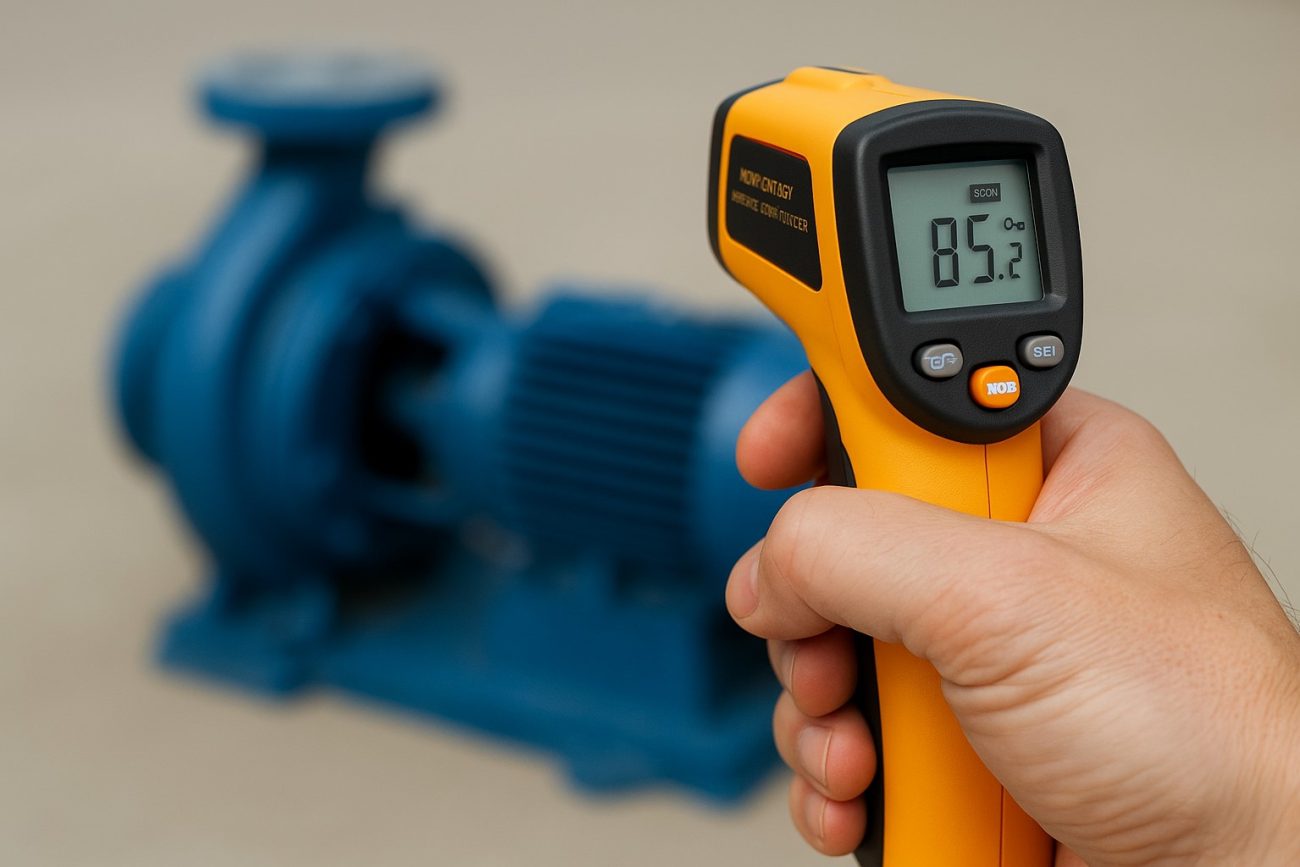
Magnetic drive (mag-drive) pumps are widely used in chemical processing, mining, and other industries where a sealless design eliminates the risk of leakage. They rely on a set of drive and driven magnets to transmit torque through a containment shell, keeping the pumped liquid completely isolated from the atmosphere.
While mag-drive pumps are highly reliable when operated within their design envelope, they are also sensitive to conditions that limit cooling flow or increase internal heat generation. When these conditions occur, temperatures inside the containment shell can rise quickly, causing bearing damage, softened plastics or linings, and even demagnetisation of the inner magnet.
How a Mag-Drive Pump Cools Itself
In a mag-drive centrifugal pump, the liquid being pumped serves two roles:
- It is the product being moved through the system.
- It is the coolant and lubricant for the bearings and inner magnet assembly.
An internal flush path, usually from the pump discharge back to the magnet/ bearing chamber and then returning to suction, carries heat away. Anything that restricts this internal circulation can lead to overheating.
Common Causes of Overheating
No or Insufficient Flow Through the Pump
- Discharge valve closed or partially shut (dead-heading).
- System blockage downstream of the pump.
- Air-binding from incomplete priming or trapped gas.
- Internal flush ports blocked by solids, crystals, or product build-up.
- Incorrect rotation after maintenance or wiring changes.
When flow stops, the pump continues to generate heat but has no medium to carry it away from the containment shell and bearings.
Suction Problems
- Strainer or inlet screen blocked.
- Suction lift too high or NPSH margin too low.
- Product temperature close to boiling point, causing flashing.
- High viscosity reducing internal flush velocity.
- Entrained air or gas from the process.
Poor suction conditions can reduce cooling flow and cause cavitation, both of which generate excess heat.
Torque Overload and Magnetic Issues
- Pumping fluids at a higher viscosity or head than designed, increasing torque demand.
- Coupling decoupling under overload, leading to loss of flow and rapid heating.
- Excess eddy-current heating with metallic containment shells at high speed.
Eddy-current heating is particularly important to monitor in metallic-can designs, as the rotating magnetic field induces currents in the containment shell that turn into heat.
Ambient and Installation Factors
- High surrounding temperatures or radiant heat from nearby equipment.
- Motor ventilation issues contributing to overall temperature rise.
- Pipe strain or misalignment adding mechanical load on internal components.
Identifying the Symptoms
| Symptom | Likely Cause | Check |
|---|---|---|
| Casing hot within minutes, low motor amps | Dead-head, blocked flush, air-bound | Discharge valve position, flow indicators, vent casing, inspect flush orifices |
| Hot running at very low flow | Flow below minimum required for cooling | Install minimum-flow bypass or interlock |
| Overload trip then hot casing | High viscosity, excessive head, decoupling | Compare actual duty to curve, check coupling rating |
| Rattling/crackling noise | Cavitation or gas | Verify NPSH, check temperature, suction line, and deaeration |
| Hotter after product change | Fluid properties changed | Check viscosity, solids content, and crystallisation risk |
Preventing Overheating
- Maintain Minimum Flow: Many mag-drive pumps require at least 20–30% of best efficiency point (BEP) flow for safe operation.
- Install Protection Devices: Flow switches, temperature sensors, or power monitors can trip the pump before overheating damage occurs.
- Keep Flush Paths Clean: Use appropriately sized strainers and clean them regularly; design for easy inspection of flush orifices.
- Match Pump to the Fluid: Verify viscosity at operating temperature and check that torque requirements stay within coupling limits.
- Consider Non-Metallic Cans: For services prone to eddy-current heating, composite containment shells can reduce internal heat load.
- Control Ambient Heat: Shield pumps from radiant heat sources and ensure motor cooling airflow is unobstructed.
Last Updated on October 24, 2025 by TPE
