
Industrial manufacturing demands reliable and versatile pumping solutions to handle everything from precise dosing to bulk fluid transfer. Whether you’re moving adhesives, coolants, or wastewater, selecting the right pump improves process efficiency, product quality, and equipment lifespan.
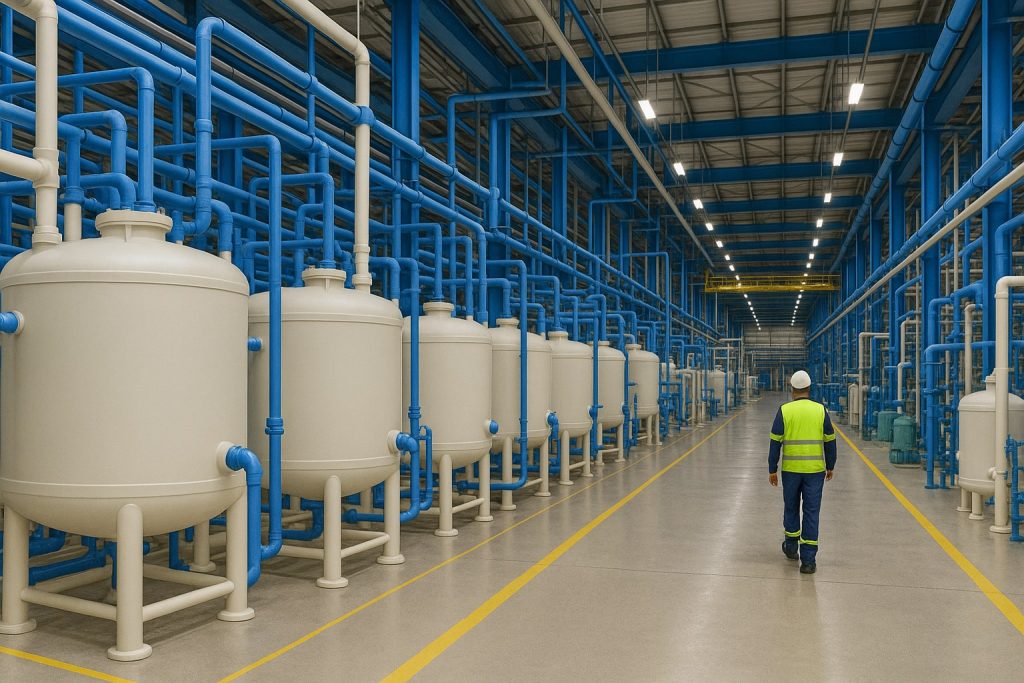
Challenges in General Manufacturing
Common pumping challenges in manufacturing environments include:
- Medium-viscosity fluids: Applications involve lubricants, adhesives, paints, coolants, and semi-viscous materials.
- Abrasive or chemical exposure: Some fluids contain particles or corrosive compounds that can damage internal components.
- Variable flow and pressure: Processes often require pumps that can adapt to changes in system conditions, from high-speed filling to low-flow dosing.
Recommended Pump Types
Based on these needs, the following pump types are commonly used in general manufacturing:
- Gear Pumps – Excellent for metering oils, lubricants, and additives with consistent, pulseless flow.
- Diaphragm Pumps (AODD) – Versatile and robust, suitable for paints, inks, wastewater, and harsh environments.
- Centrifugal Pumps – Ideal for clean or lightly contaminated fluids like water, coolant, and rinse solutions.
- Peristaltic Hose Pumps – Great for abrasive or chemically aggressive fluids, and capable of dry running with easy maintenance.
- Dosing Pumps – Provide high precision in chemical injection and fluid blending processes.
- Helical Rotor (Progressive Cavity) Pumps – Handle viscous, abrasive, or shear-sensitive materials with gentle, low-pulsation flow.
Key Considerations
When choosing a pump for manufacturing applications, keep these factors in mind:
- Seal Type and Maintenance – Choose between mechanical seals, magnetic drives, or seal-less designs based on fluid characteristics and downtime limitations.
- ATEX Compliance – For environments with explosive gases or solvents, ensure the pump meets hazardous area certification.
- System Integration and Control – Pumps should interface easily with PLCs, flow control systems, or variable speed drives for efficient automation.
Last Updated on June 1, 2026 by TPE