
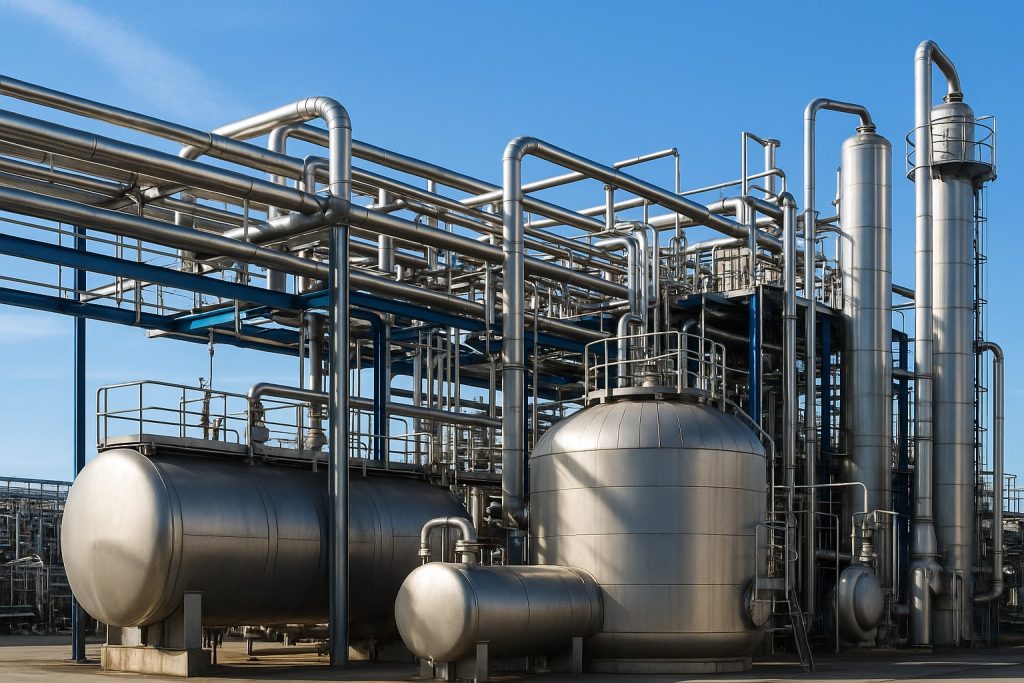
The chemical industry demands pumps that are more than just efficient—they must be safe, precise, and resistant to some of the most aggressive substances used in processing. From transferring corrosive acids to dosing sensitive reagents, selecting the right pump is essential for both performance and compliance.
How to Choose the Right Pump for Chemical Processing
Chemical handling involves a range of operational and safety challenges. To ensure safe and efficient fluid transfer, you need pumps that are specifically engineered for chemical applications.
Common Challenges in Chemical Pumping
- Handling corrosive, hazardous, or reactive fluids
- Delivering precise dosing of acids, solvents, and reagents
- Preventing leaks, vapour loss, and chemical degradation
- Meeting strict safety, environmental, and ATEX compliance standards
Recommended Pump Types for Chemical Applications
Magnetic Drive Pumps
- Seal-less, leak-free design
- Ideal for corrosive and hazardous chemicals
- No mechanical seal to maintain
Diaphragm Pumps (AODD & EODD)
- Chemically resistant construction
- Dry-run capable and portable
- Suitable for batch transfer and aggressive fluids
Peristaltic Hose Pumps
- Perfect for dosing viscous or abrasive chemicals
- No contact between pump components and fluid
- Self-priming and easy to clean
Centrifugal Pumps (PP, PVDF, ETFE)
- Cost-effective for high-volume chemical transfer
- Lightweight and resistant to a wide range of chemicals
- Commonly used in storage tank unloading and circulation
Key Considerations When Selecting a Chemical Pump
1. Material Compatibility
Ensure wetted components are chemically compatible. Common options include:
- PP, PVDF, ETFE, PTFE
- Stainless Steel 316
- Hastelloy for aggressive or mixed chemicals
2. Containment & Leak Prevention
For hazardous fluids, consider:
- Magnetic drive designs to eliminate seal failure risks
- Double-walled pump heads or containment shells for added protection
3. Accuracy and Control
- Look for pumps with fine dosing control
- Variable speed drives (VFDs) or air-operated models can help match process needs
4. Explosion Protection (ATEX Zones)
- Use intrinsically safe motors or pneumatic operation in flammable environments
- Ensure the pump complies with ATEX or local hazardous area standards
5. Maintenance and Cleanability
- Choose pumps that are easy to strip and clean
- For batch processes or multiple chemical uses, quick-change hose or diaphragm designs may reduce downtime
Need Help Selecting the Right Chemical Pump?
Whether you’re handling solvents, acids, polymers, or caustics, selecting the right pump is critical for uptime, safety, and compliance. Talk to our pump experts today for tailored advice on your application.
Last Updated on June 19, 2025 by TPE