
Choosing the right pump can feel confusing when there are so many designs and technical terms out there. Each pump type has its own strengths, limits, and best-fit applications. That’s why we created this page — to give you a clear, simple explanation of the most common pump types you’ll come across. Whether you work in mining, food and beverage, water treatment, or general industry, this guide will help you understand the basics and make better pump decisions.
Peristaltic Hose Pumps

Peristaltic hose pumps move liquid by squeezing a flexible hose in a rolling motion. Only the inside of the hose touches the liquid, which keeps things clean and chemical-resistant. These pumps self-prime and can run dry. They also handle abrasive and aggressive fluids well. The main drawback is hose wear, which requires planned replacement. Flow is pulsed, but predictable and easy to control.
Centrifugal Pumps
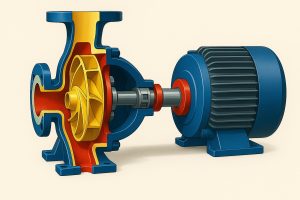
Centrifugal pumps move fluid with a spinning impeller. The liquid enters through the centre and the impeller throws it outward, increasing pressure and flow. This design gives smooth and continuous pumping. It works best with clean and low-viscosity liquids. Open impellers handle solids better, while closed ones offer higher efficiency. To get the best results, keep the pump close to its Best Efficiency Point and ensure good suction conditions.
Magnetic Drive Pumps
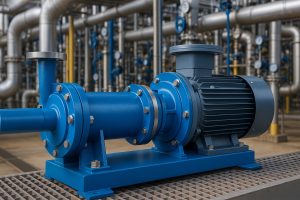
Magnetic drive pumps remove the need for a shaft seal. They use magnets to transmit power through a containment shell. This makes them very reliable for handling corrosive or dangerous fluids. Because there is no mechanical seal, leaks are almost impossible. However, these pumps are not ideal for solids and they cannot run dry. They usually handle lower pressures compared to sealed centrifugal pumps.
Slurry Pumps
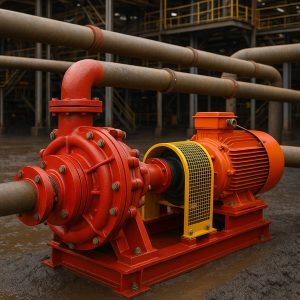
Slurry pumps are built to cope with tough, abrasive fluids containing solid particles—think mining, dredging, tailings, concrete mixes, etc. To survive the wear, they use robust materials (like hard metal or rubber linings), thicker impellers with larger passages, slow rotational speeds, and replaceable wear parts. Design variation matters (horizontal vs vertical vs submersible) depending on how/where the slurry is encountered. Proper material selection and maintenance are key to long life.
Diaphragm Pumps

Diaphragm pumps use a flexible diaphragm that moves back and forth to draw in and push out liquid. Check valves keep flow in one direction. These pumps are popular because they self-prime and handle thick or abrasive fluids. They can even run dry without damage. Air-driven and electric versions are available. On the downside, flow is more pulsed and maintenance on diaphragms and valves is sometimes needed.
Drum Pumps
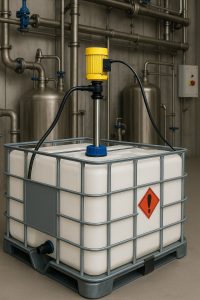
Drum pumps make it easy to transfer liquids from drums, barrels, or IBCs. They improve safety by avoiding the need to tip or pour heavy containers. Options include centrifugal designs for thin liquids and positive displacement types for thicker ones. They can be powered by electric, air, or battery motors. Choosing the right tube and material keeps them compatible with chemicals, food products, or fuels. Their strength lies in safety, portability, and quick fluid transfer.
Helical Rotor Pumps
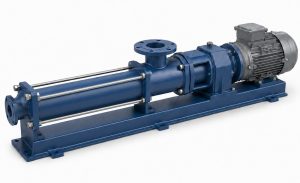
Helical rotor pumps, also known as progressive cavity pumps, move fluid using a helical rotor turning inside an elastomer stator. This creates sealed cavities that carry liquid from suction to discharge in a smooth, controlled flow. They are well suited to viscous fluids, sludge, soft solids, shear-sensitive products, and dosing applications. Their main strengths are steady flow, good suction capability, and gentle handling. The main drawbacks are stator wear, chemical compatibility limits, and poor tolerance for dry running.
Last Updated on June 1, 2026 by TPE