

Centrifugal Pumps: Open vs. Closed Impellers, Curve Interpretation
How Centrifugal Pumps Work
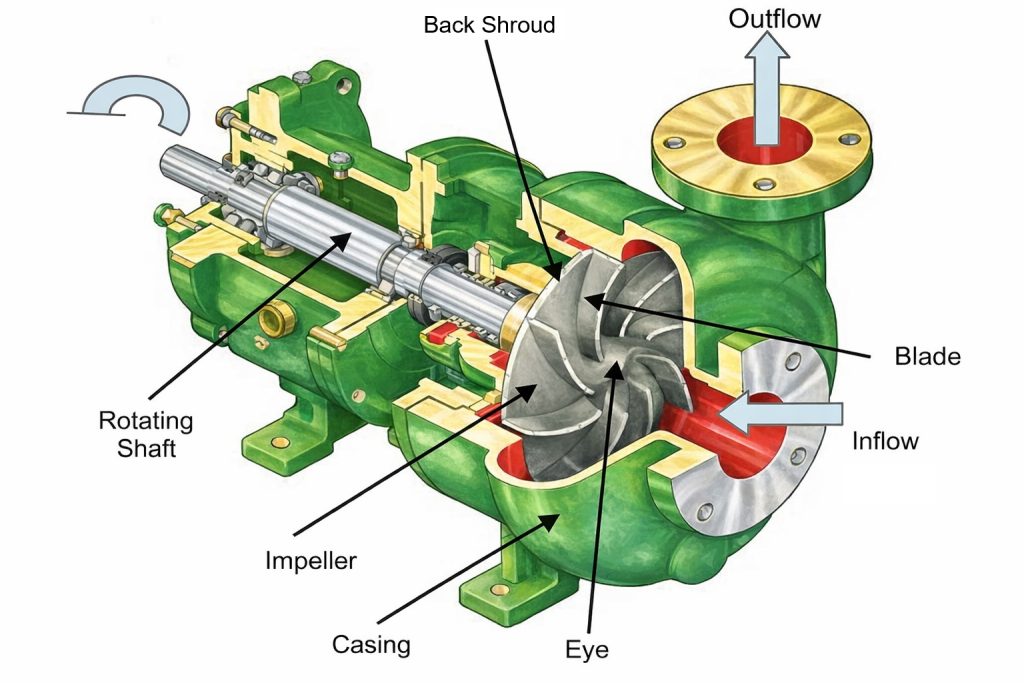
Centrifugal pumps use a rotating impeller to transfer energy from a motor to the fluid being pumped. As the impeller spins, it creates a low-pressure area at the eye (centre), drawing liquid in. The fluid is then flung outward by centrifugal force into the volute casing, where it gains velocity and pressure before exiting the pump.
This principle allows for continuous, non-pulsating flow, making centrifugal pumps ideal for moving large volumes of liquid efficiently.

Open vs. Closed Impellers
The impeller is the heart of a centrifugal pump, responsible for moving the fluid. The two main impeller types are open and closed, each suited to different duties.
Open Impellers
Design: Blades (vanes) are attached to a central hub with no front or back shroud.
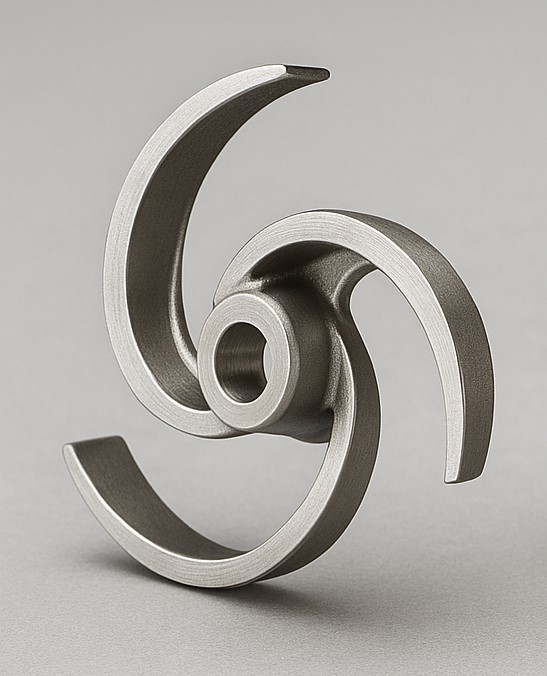
How they work: Fluid enters at the center and flows through exposed vanes. Open design allows larger solids or fibrous material to pass through.
Applications:
- Slurries and solids-laden fluids
- Wastewater and mining operations
- Food processing with fibrous content
Advantages:
- Less clogging with solids
- Easier to clean and inspect
Disadvantages:
- Lower efficiency
- More wear due to exposed vanes
Closed Impellers
Design: Vanes are enclosed between two discs (shrouds).
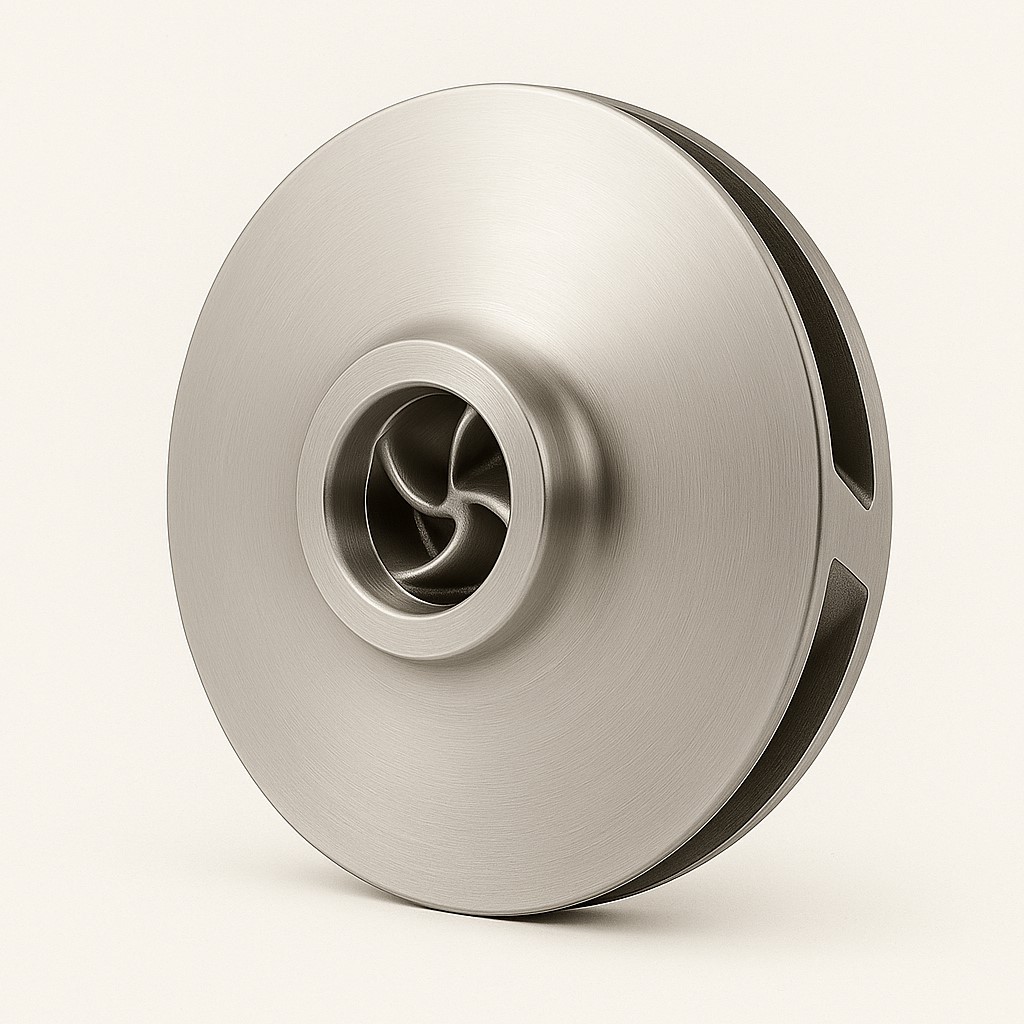
How they work: Fluid flows smoothly through tightly sealed channels, resulting in minimal slip and higher energy transfer.
Applications:
- Clean water systems
- Chemical transfer
- Industrial circulation systems
Advantages:
- High efficiency
- Ideal for high head applications
Disadvantages:
- Not suitable for solids
- More prone to blockage
—
Interpreting a Centrifugal Pump Curve
Pump curves are essential tools for selecting and operating pumps efficiently. They show how the pump performs across a range of conditions.
Key Components of a Pump Curve
Flow vs. Head (Q-H Curve)
- Shows how much pressure (head) the pump can produce at various flow rates.
- As flow increases, head decreases.
Best Efficiency Point (BEP):
- The flow rate at which the pump runs most efficiently.
- Operating near BEP ensures low wear and energy usage.
Power Curve (kW):
- Indicates the motor power required at different flows.
- Critical for correct motor sizing.
NPSHr Curve (Net Positive Suction Head Required):
- Minimum pressure needed at the suction side to avoid cavitation.
- Must compare with system NPSHa (available).
Efficiency Curve:
- Highlights pump efficiency at different points.
- Shows why avoiding extremes of flow range is important.
When selecting a centrifugal pump:
- Choose an open impeller for abrasive, fibrous, or solids-laden fluids. (related product, centrifugal slurry pumps)
- Choose a closed impeller for clean, pressurised fluid systems.
- Use the pump curve to match your system’s duty point and avoid inefficiencies or cavitation.
Cutaway view of a standard centrifugal pump:
Key Takeaways
- Centrifugal pumps use rotating impellers to transfer energy and create continuous flow.
- Open impellers allow larger solids to pass but have lower efficiency, while closed impellers are more efficient but not suitable for solids.
- Understanding pump curves is essential for efficient pump selection and operation, showing performance across various flow conditions.
- Key components include flow vs. head, best efficiency point, power curve, net positive suction head required, and efficiency curve.
- Choose open impellers for solids-laden fluids and closed impellers for clean systems, using pump curves to avoid inefficiencies.
- You may be interested in what causes pump vibration.
Last Updated on August 28, 2026 by TPE