
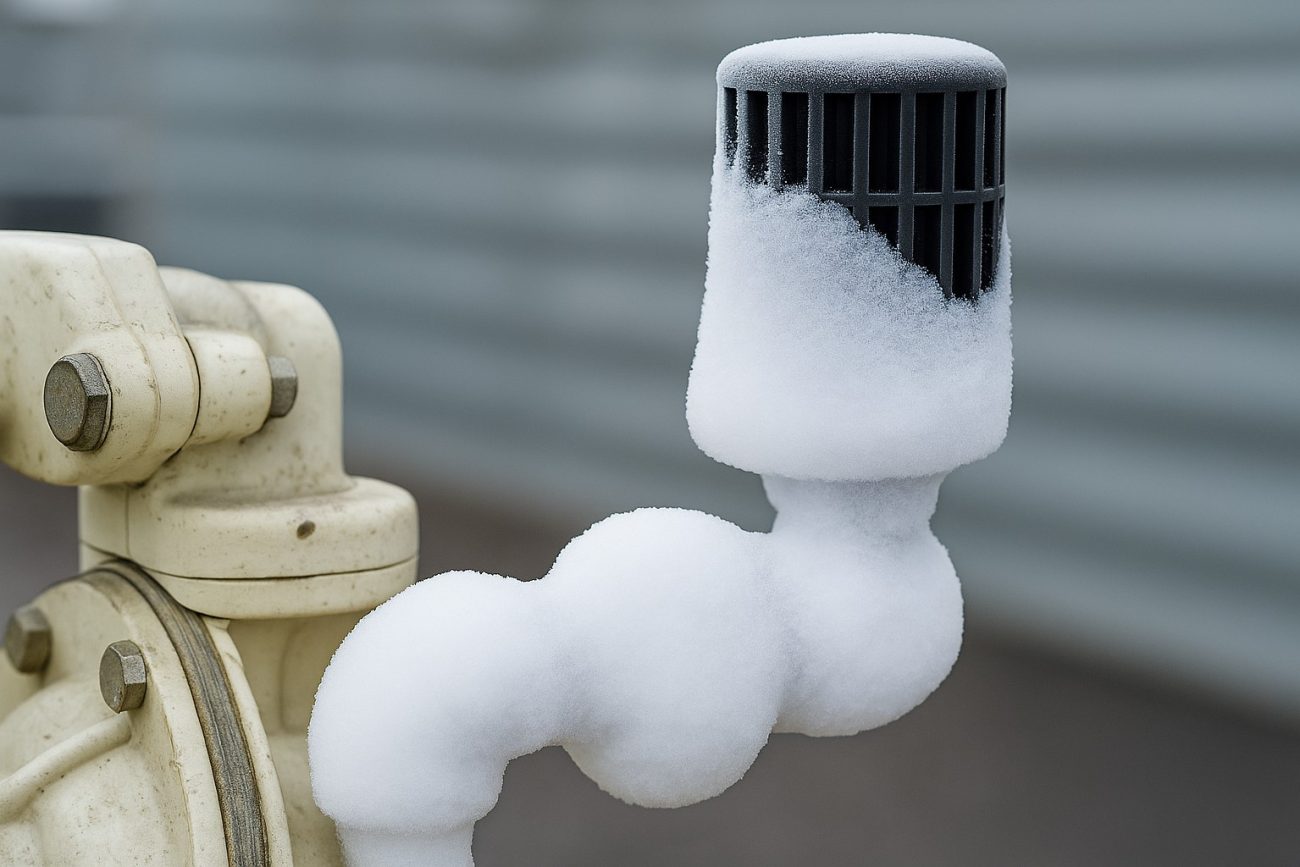
If you’re operating air-operated diaphragm pumps (AODD) in cold or humid environments, you’ve likely encountered a frustrating issue: the muffler freezes up. This isn’t just an inconvenience — it can lead to reduced performance, pump failure, and unplanned downtime.
Here’s why it happens, and more importantly, how to stop it.
Why Do Mufflers Freeze?
As compressed air expands and exits the pump, it cools rapidly — often below freezing. If there’s moisture in the air supply (even small amounts), it can turn to ice in the exhaust or muffler. Over time, this ice can block airflow and shut the pump down entirely.
Proven Strategies to Prevent Muffler Freezing
1. Use Dry, Clean Air
Moisture is the main culprit. Removing it at the source is key:
- Install air dryers (refrigerated, desiccant, or membrane) in your compressed air system.
- Regularly inspect and maintain filters and dryers to ensure performance doesn’t drop off.
2. Lower the Air Pressure and Flow
Less air = less cooling effect.
- Reduce operating pressure to the lowest level that still delivers the required performance.
- Consider upsizing the pump so it can deliver the same flow at a lower speed and air consumption.
3. Upgrade or Modify the Muffler
Some small tweaks can make a big difference:
- Use plastic mufflers instead of metal to reduce heat transfer.
- Install a larger muffler to delay or prevent ice build-up.
- Attach a rubber extension hose to act as an insulating buffer.
4. Improve Exhaust Air Design
Keep the path for exhaust air as simple as possible:
- Avoid complex bends and fittings where ice can accumulate.
- Use a straight-line discharge setup or a single port to direct air away cleanly.
5. Add Heat Tracing or Insulation
If freezing is persistent, consider applying direct heat:
- Wrap mufflers and exhaust piping with electric heat trace cable.
- Insulate to trap warmth and prevent ice from forming.
6. Stay on Top of Maintenance
- Clean mufflers regularly to remove contaminants that attract moisture.
- Ensure inlet and outlet pipe sizes are correct and not restricting airflow.
Bonus Tip: Consider Environmental Conditions
If possible, house the pump in a protected, heated enclosure. Localized heating (even with something as simple as a heat lamp) can keep exhaust temps above freezing in critical areas.
Don’t Let a Frozen Muffler Slow You Down
Air-operated diaphragm pumps are tough workhorses — but they need the right setup to perform reliably in all conditions. If muffler icing is disrupting your operations, implementing even a few of the above strategies can make a significant difference.
Last Updated on October 23, 2025 by TPE
