
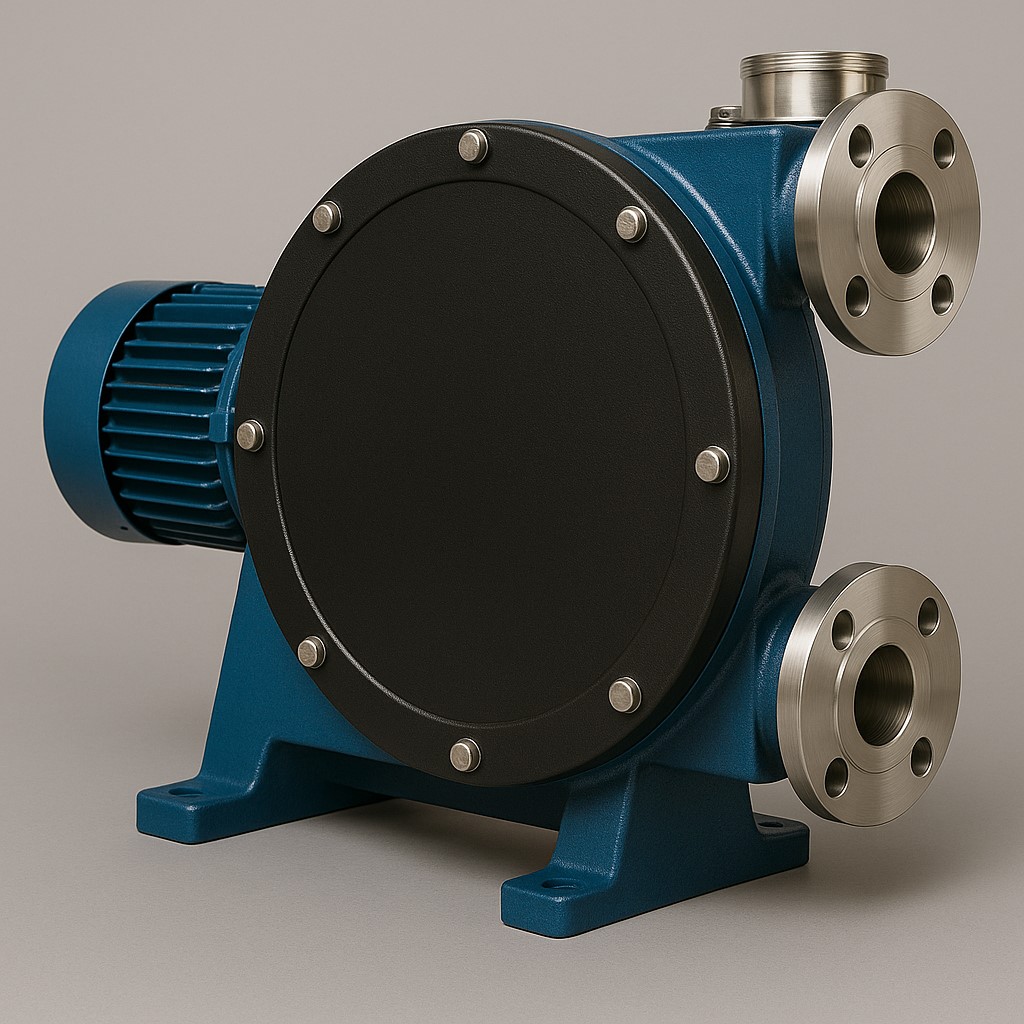
Peristaltic hose pumps are known for their simplicity and ability to handle abrasive, viscous, or shear-sensitive fluids. But like any pump, they aren’t immune to problems. If you’re dealing with leaks, loss of flow, or a sudden failure, don’t jump straight to ordering a new unit. Often the issue comes down to a handful of common causes that can be corrected quickly.
Here are five things to check before you start pulling your pump apart.
1. Hose or Tube Condition
The hose is the heart of the pump. Over time it flexes thousands of times, and eventually it will wear. Look for:
- Cracks or splits from chemical attack or fatigue.
- Swelling or softening if the wrong material is used for the fluid.
- Abrasion marks on the outer surface where rollers or shoes contact.
If you’re pumping a chemical outside the hose material’s compatibility range, you’ll see premature failure. Always confirm the hose elastomer is matched to the fluid.
2. Incorrect Lubrication (for Hose Pumps with Shoe Design)
Shoe-type peristaltic pumps rely on lubricant inside the casing to reduce friction and cool the hose. Too little lubricant, or the wrong type, will cause:
- Excessive hose heating
- Cracking at the points of compression
- Shortened hose life
Check the lubricant level and verify you’re using the manufacturer’s recommended type. Grease or oil substitutes are a recipe for leaks.
3. Roller or Shoe Wear
If the rollers (or shoes) that compress the hose are worn, they won’t maintain consistent squeeze. That means:
- Reduced flow rate
- Pulsing or irregular discharge
- Localised hose wear where compression is uneven
Inspect for flat spots, sharp edges, or misalignment in the rotor. Replacing worn rollers is much cheaper than chasing repeat hose failures.
4. Overpressure or Blockages
Peristaltic pumps are positive displacement. If a discharge line is blocked or a valve is accidentally shut, pressure rises fast. The hose is the weak point and will split under the strain.
Always make sure a pressure relief valve or bypass arrangement is in place. If a hose has burst suddenly, check the system for blockages before replacing it.
5. Installation and Operating Conditions
Sometimes the problem isn’t the pump at all. Look at:
- Suction lift too high — starving the pump of fluid can create vacuum damage in the hose.
- Excessive speed — running at higher rpm than recommended accelerates fatigue.
- Temperature extremes — heat softens hoses; cold makes them brittle.
Correcting the operating conditions can double hose life and eliminate leaks.
Final Thoughts
Peristaltic pumps are tough, but they’re not indestructible. Leaks and failures almost always trace back to hose condition, lubrication, wear parts, pressure, or system setup. A quick check of these five areas usually points you to the root cause.
Staying on top of maintenance — especially hose inspection and proper lubrication — saves far more in downtime and clean-up than it costs to keep spares on hand.
As with all positive displacement pumps, protect the pump with relief devices and respect the manufacturer’s operating limits. Do that, and your peristaltic pump will reward you with years of reliable service.
