
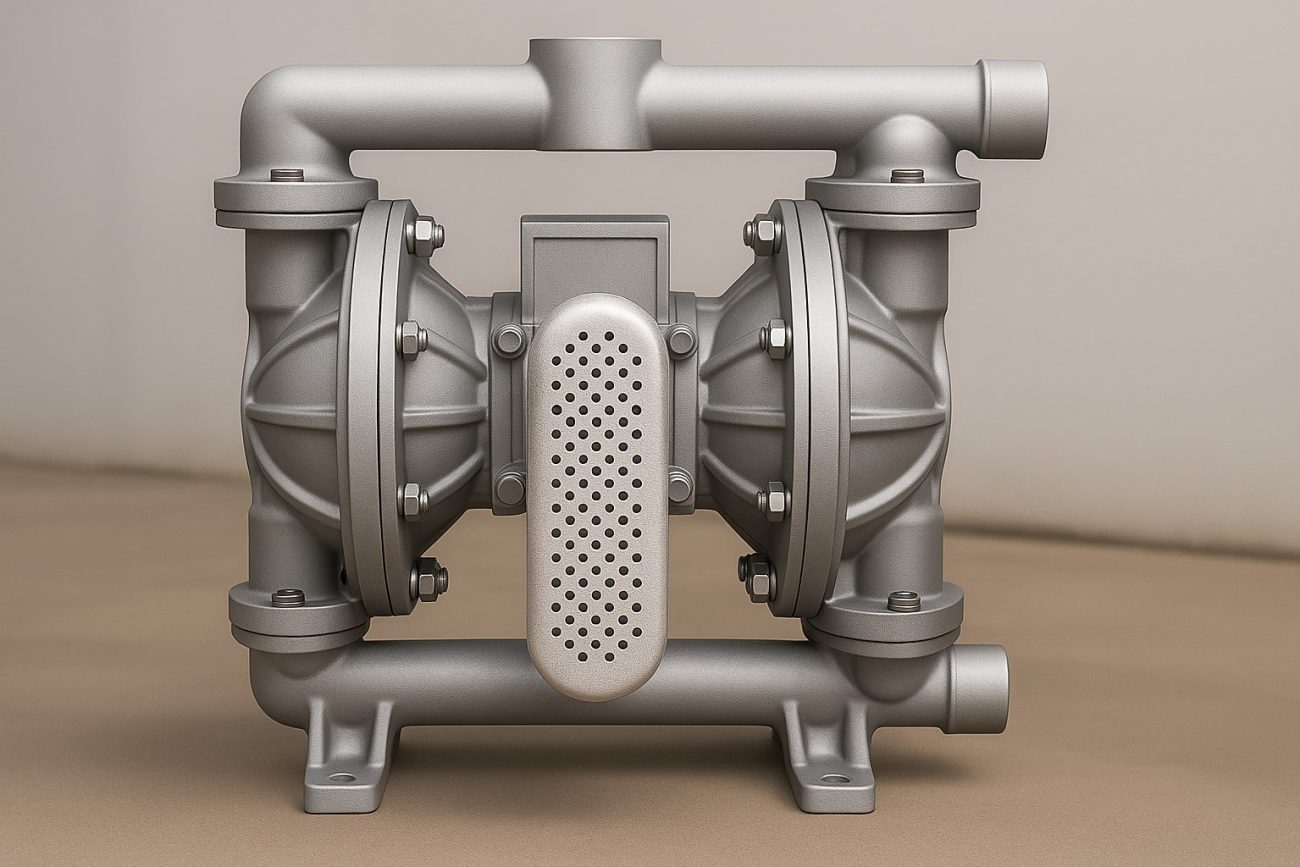
Air Operated Double Diaphragm (AODD) pumps are a favourite across industries because they handle almost anything—slurries, corrosives, viscous fluids, and even delicate products. One of their biggest selling points is that they’re self-priming. But in practice, operators often run into a common problem: the pump cycles but won’t lift liquid.
The culprit? Starting too fast.
What Happens Inside During Priming
AODD pumps rely on check valves, usually ball-and-seat designs, that open and close with the diaphragm stroke. When you hit the pump with full air pressure right away, the diaphragms move aggressively. Instead of seating cleanly, the balls bounce around inside the chambers.
If the balls don’t seat, the pump can’t form a vacuum. Without that vacuum, fluid won’t enter the suction line. From the outside it sounds like the pump is working, but no liquid is being moved.
How to Prime an AODD Pump Properly
The trick is to let the pump ease itself into operation:
- Start slow. Crack the air regulator and let the diaphragms move gently.
- Wait for the draw. After a few strokes you’ll hear the sound change as fluid reaches the pump.
- Ramp up. Once liquid flow is established, gradually increase the air supply until you reach the required duty point.
- Check suction. Make sure your suction line is airtight, valves are open, and the lift is within the pump’s capability. Even with perfect technique, poor suction conditions will cause trouble.
A Practical Tip
If the pump struggles to catch prime, wetting the check valves with process fluid or tilting the pump slightly can help the balls seat properly. That small adjustment often makes the difference between frustration and smooth startup.
The takeaway: An AODD pump will self-prime, but only if you give it the chance. Rushing air into it causes ball bounce and wasted time. Start slow, let the vacuum build, and then bring it up to speed—your pump (and your patience) will thank you.
