
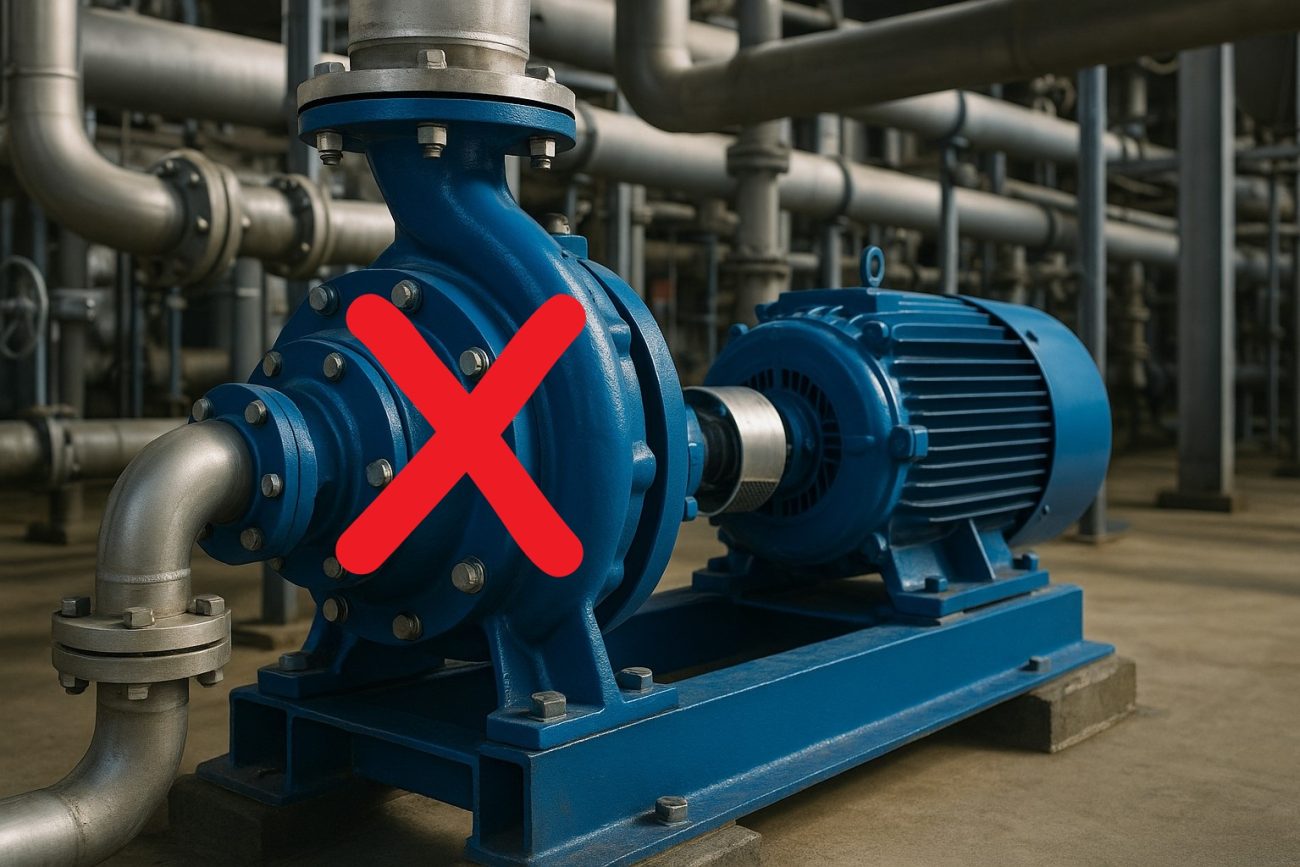
When it comes to pump reliability, few things are as critical — and as commonly overlooked — as proper suction piping design. Poor suction conditions are a leading cause of pump failure, cavitation, and performance issues.
Whether you’re commissioning a new pump system or troubleshooting flow issues, this guide will walk you through the key dos and don’ts of suction pipework — and why they matter.
DO: Follow These Best Practices
- Keep a straight run into the pump
Install five to ten pipe diameters of straight pipe upstream of the suction inlet. This reduces turbulence and ensures smooth, laminar flow into the pump.- Why it matters: Turbulent flow can cause uneven loading on the impeller and reduce pump efficiency.
- Oversize the suction line
Suction piping should typically be one size larger than the pump inlet. Larger pipe means lower velocity, less friction loss, and better suction conditions.- Rule of thumb: Keep suction velocity under 1.5 metres per second for water-like fluids.
- Use eccentric reducers – flat side up
If reducing pipe size, use eccentric reducers with the flat side on top to prevent air pockets from forming. - Minimize suction pipe length and fittings
The shorter and straighter the suction line, the better. Every bend, elbow, and fitting introduces additional resistance and potential air entrapment. - Slope the pipe toward the pump
If drawing from a non-flooded source (suction lift), slope the horizontal pipe upward toward the pump. For flooded suction, slope downward to keep air from accumulating. - Install isolation valves and a strainer (where needed)
Use valves for maintenance isolation and strainers to protect the pump from debris — but don’t overdo it with fine mesh. - Check NPSHa versus NPSHr
Always verify that Net Positive Suction Head Available (NPSHa) exceeds the pump’s Net Positive Suction Head Required (NPSHr) by at least 0.5 to 1 metre to prevent cavitation.
DON’T: Avoid These Common Mistakes
- Don’t use elbows right at the inlet
Sharp elbows or tees too close to the pump disturb the flow pattern and lead to uneven wear. - Don’t create high points or loops
These act as air traps, especially in suction-lift setups. Air pockets reduce flow and cause noisy, damaging cavitation. - Don’t undersize the suction pipe
High fluid velocity means higher friction losses, which reduces NPSHa. Oversize instead, especially with viscous or slurry fluids. - Don’t use concentric reducers in horizontal lines
They can allow air to collect at the top of the pipe and feed it directly into the pump inlet. - Don’t let the pump run dry
Always prime the pump before starting. Dry-running can destroy seals and internal components in seconds. - Don’t hang the pipe off the pump
Support suction piping independently. The pump casing isn’t designed to carry pipe loads. - Don’t forget about fluid properties
Viscosity, solids content, and temperature all affect suction conditions. For example, slurries require lower velocities and abrasive-resistant materials.
Even the most expensive, high-efficiency pump will underperform — or fail — if suction conditions aren’t right. These design principles might seem simple, but they’re often the root cause of field issues.
Investing a little extra time and attention on suction pipework design will save you time, money, and headaches in the long run.
Last Updated on September 4, 2025 by TPE
