
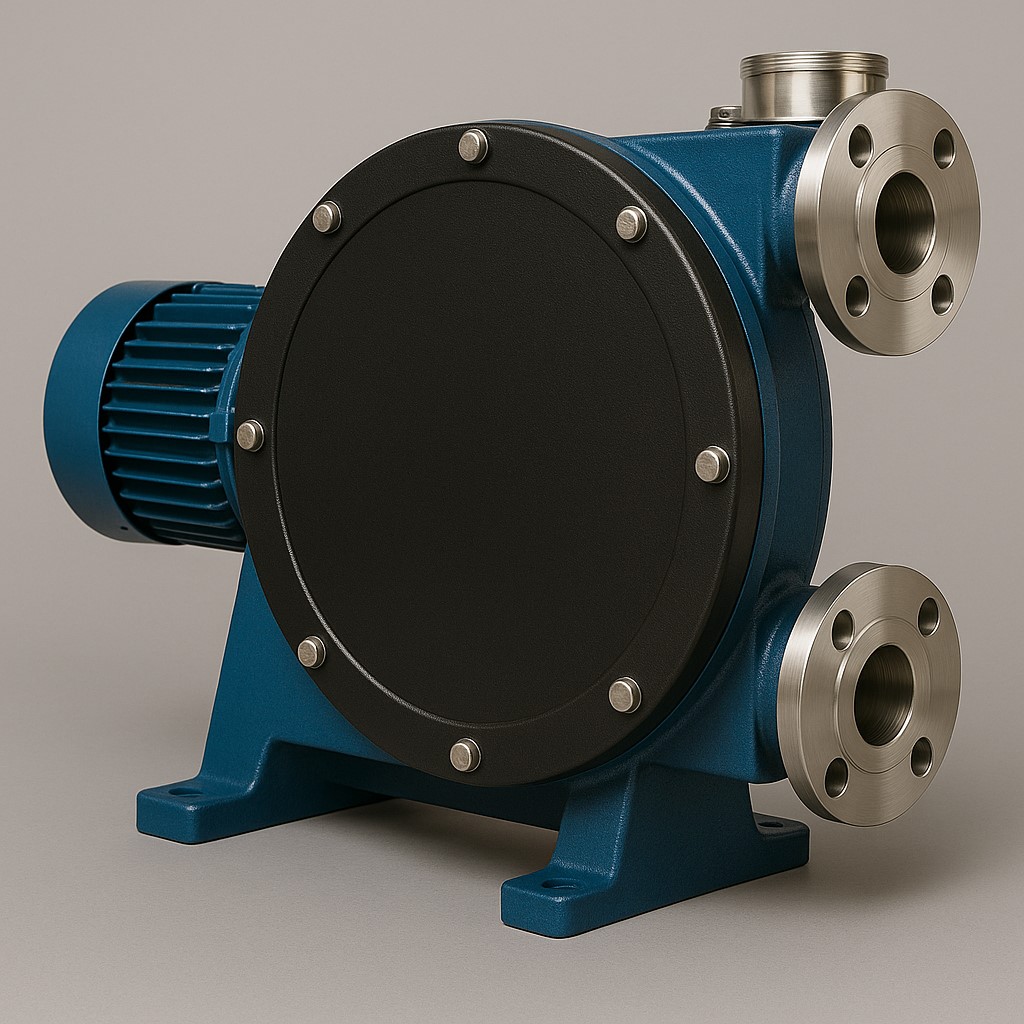
Peristaltic hose and tube pumps are well-known for being self-priming. They generate strong suction lift by squeezing the hose and pulling fluid in — no external priming needed. So, when one won’t prime, it usually means something in the setup, hose, or surrounding system isn’t right.
Here are the most common causes — and how to fix them.
1. Air Leaks on the Suction Side
Even the smallest leak can kill priming. Because these pumps rely on vacuum, a loose clamp or cracked fitting lets in air instead of fluid.
Check for:
- Loose hose clamps or cracked fittings
- Pinholes in suction hose
- Mis-sealed threaded or flanged joints
Fix: Seal or replace faulty components. A quick vacuum test will often pinpoint leaks.
2. Suction Lift Is Too High
While peristaltic pumps can pull a strong lift, they’re not limitless. Water up to ~8–9 m is possible under ideal conditions, but viscous slurries or aerated fluids cut that down fast.
Fix:
- Lower the pump closer to the source
- Keep suction lines short, straight, and oversized
- Flood the suction if possible
3. Hose Fatigue or Damage
If the hose has flattened, stiffened, or cracked, it won’t form a proper vacuum seal when squeezed.
Fix: Replace the hose. This is one of the most common and quickest solutions.
4. Fluid Characteristics
Some fluids are simply harder to prime:
- High viscosity slows filling of the hose
- Entrained air reduces suction efficiency
- Foaming fluids prevent a solid vacuum
Fix:
- Reduce pump speed at startup to allow time for filling
- Keep suction pipework simple, with minimal bends and restrictions
5. Blocked or Collapsed Suction Line
If the suction hose collapses under vacuum or debris has built up in the line, the pump has nothing to draw.
Fix:
- Check strainers and suction lines for blockages
- Use reinforced hose designed for vacuum service
6. Incorrect Shimming
On shoe-type hose pumps, shimming sets the compression of the shoes against the hose. If the shims are incorrect — too tight or too loose — the pump won’t generate enough vacuum to prime properly.
Fix: Follow the manufacturer’s shim adjustment procedure carefully after a hose change. Always use the correct shim thickness for the hose size and pump model.
7. Running Dry Too Long
Peristaltic pumps can tolerate dry running, but if left too long, heat builds up. This makes the hose less flexible, reducing its ability to seal and draw fluid.
Fix: Minimise dry running during startup. Once the pump is turning, it should prime almost immediately if the system is set up correctly.
Key Takeaway
A peristaltic pump failing to prime is almost always a system issue — air leaks, excessive lift, hose wear, collapsed suction, or incorrect shimming. By working through these systematically, you’ll usually have the pump drawing fluid again in no time.
Last Updated on October 24, 2025 by TPE
