
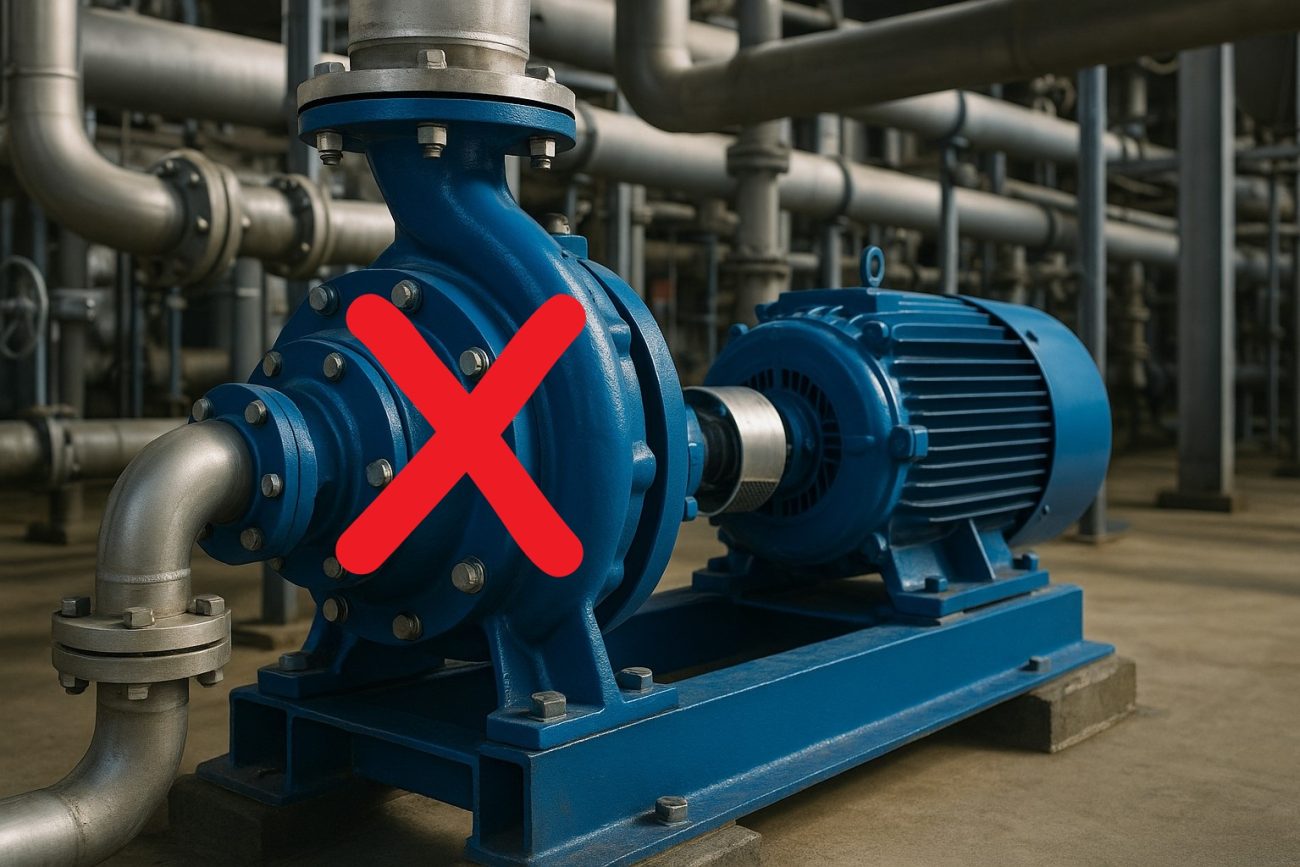
When you’re tight for space in a pump installation, it’s tempting to run your pipework straight into the pump with an elbow right on the nozzle. It looks neat, saves some room, and seems harmless enough. But here’s the catch — elbows in the wrong place can create big headaches for both your pump and your process.
Let’s break it down.
Elbows on the Suction Side: A Shortcut to Trouble
The suction side of a pump is the most sensitive part of the system. The pump impeller relies on smooth, even flow into the eye. Stick an elbow right on the suction port and you instantly disturb that flow.
- Turbulence and swirl: An elbow creates uneven velocity as fluid enters the impeller. Instead of a clean, straight flow, the pump gets a swirling mess.
- Higher cavitation risk: That turbulence can cause local pressure drops, making cavitation much more likely. Cavitation eats away at impellers and shortens pump life.
- Extra stress on the pump: Uneven loading of the impeller can deflect the shaft, which means seals and bearings wear out faster.
A good rule of thumb is to keep at least 5–10 pipe diameters of straight run before the pump suction. If space is tight, use a long-radius elbow followed by an eccentric reducer (flat on top) to keep the flow as stable as possible.
Elbows on the Discharge Side: Vibration and Strain
The discharge side may seem less critical — after all, the pump is pushing fluid out under pressure. But an elbow right at the discharge port can still cause problems.
- Hydraulic shock and vibration: A sharp turn immediately after the impeller exit, creates turbulence and pressure fluctuations. Over time, that vibration can shorten the pump’s life.
- Strain on the casing: If the elbow isn’t properly supported, the weight of the pipework transfers straight onto the pump casing. This can lead to cracked housings, distort alignments, or simply cause leaks at the flange.
Best practice is to allow a short straight run off the pump and ensure any nearby elbows are well supported so the pump isn’t carrying the load.
Elbows right on a pump’s suction or discharge might look like a tidy shortcut, but they almost always cause issues. You could end up with turbulence, vibration, cavitation, and premature wear — all of which means downtime and higher repair bills.
Take the time to design your pipework with straight runs where the pump needs them, and your equipment will reward you with smoother operation and longer life.
Last Updated on April 2, 2026 by TPE
