
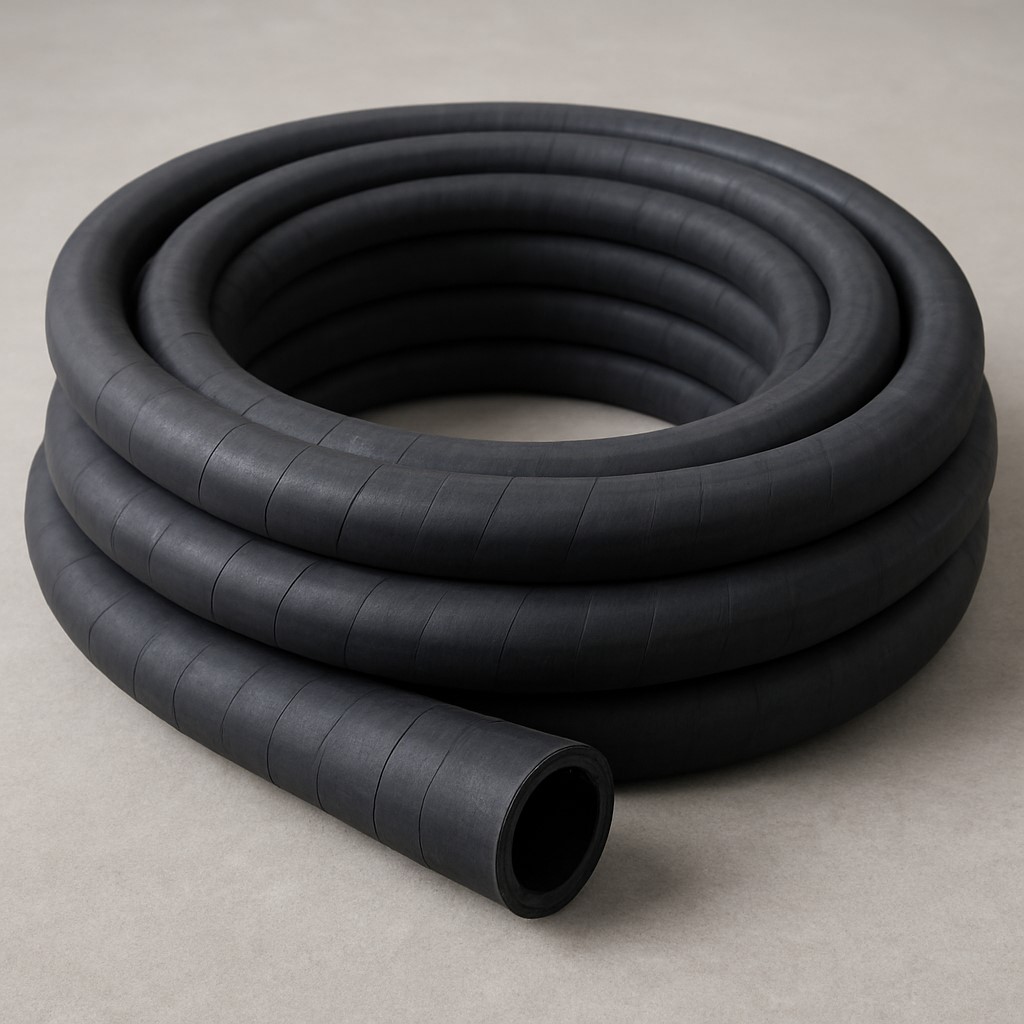
If you’re pumping thick slurries, pastes, or anything loaded with solids, you’ll know hoses can take a beating. Blockages, wear, and unexpected failures can stop a process fast. The good news? A few small changes can make a big difference.
1. Pick the Right Hose for the Job
- Not every hose is built for slurries or abrasive fluids.
- Rubber, reinforced synthetics, or PTFE-lined hoses all behave differently.
- If you’re pumping something gritty or sticky, choose a lining that can handle it.
2. Watch Your Flow Speed
- Too slow → solids settle and block the line.
- Too fast → it’s like running sandpaper through the hose.
- Aim for the balance where solids stay suspended without chewing out the inner wall.
3. Don’t Force Tight Bends
- Sharp turns are trouble spots where solids collect.
- Turbulence increases and wear happens faster.
- Keep bends as gentle as possible.
- Use rigid pipe where you can, with hose only where flexibility is required.
4. Flush and Check Often
- For sticky products, a quick flush with water or solvent keeps things moving.
- Regular checks catch early warning signs:
- Soft spots
- Bulges
- Scuffs
5. Protect the Outside Too
- Hoses don’t just wear from the inside.
- Protective covers help in high-traffic areas.
- Good clamps stop kinking, twisting, and uneven wear.
Takeaway: High-viscosity or abrasive fluids don’t have to mean constant hose problems. With the right hose choice, smart layout, and a bit of preventative care, you’ll cut downtime and extend hose life.
At The Pump Expert, our goal is simple: to help people everywhere understand their pumps and equipment better. The more you know, the more reliable and efficient your system becomes. No sales pitch—just practical, experience-based advice you can actually use.
Last Updated on September 18, 2025 by TPE
