
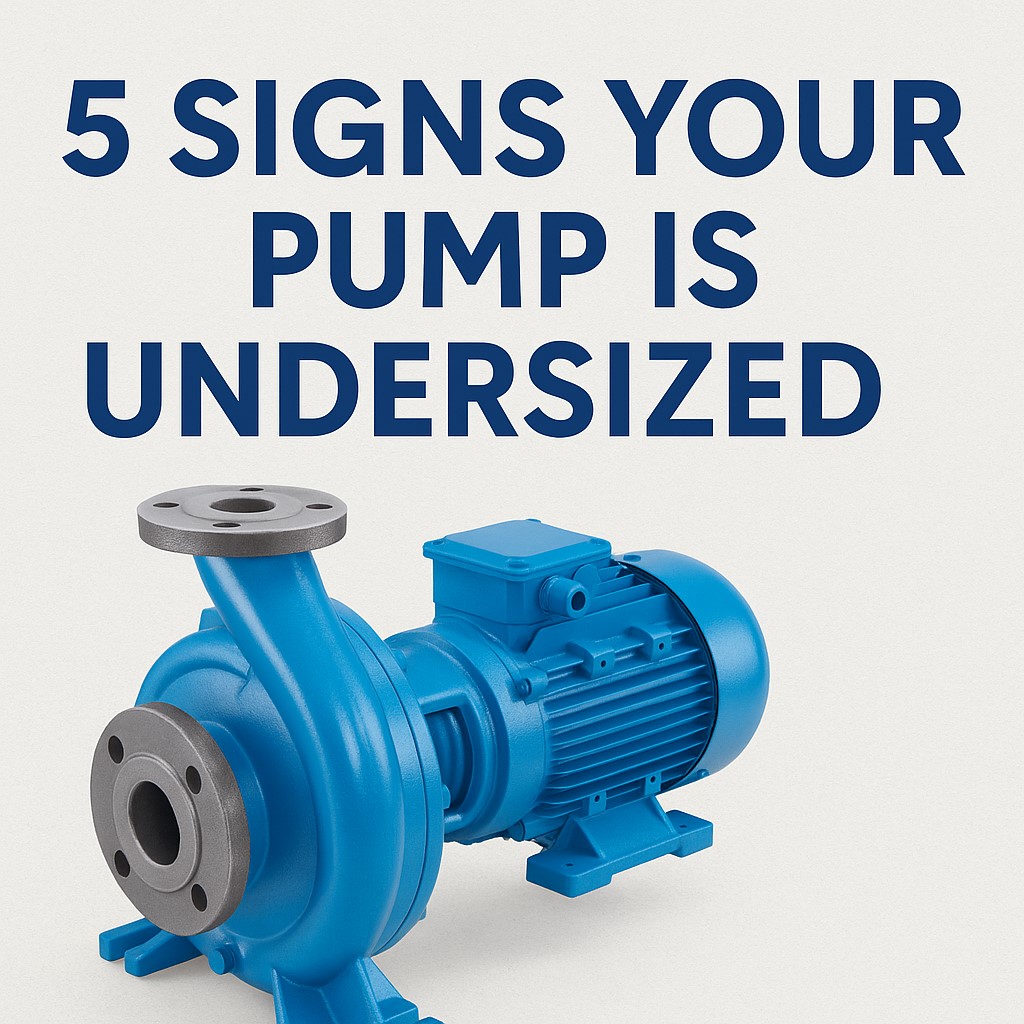
When it comes to pump selection, bigger isn’t always better—but smaller can be a serious problem. An undersized pump can lead to poor performance, excessive wear, and higher operational costs. Whether you’re in mining, manufacturing, or water treatment, recognizing the warning signs early can help you avoid system downtime and costly repairs.
Here are five clear signs your pump might be too small for the job—and what you can do about it.
1. You’re Not Getting Enough Flow
If your system consistently delivers less fluid than required, that’s the most obvious red flag.
What to look for:
- Process tanks not filling fast enough
- Spray systems with poor coverage
- Flow meters showing lower-than-expected readings
Why it happens:
The pump may not generate enough pressure (head) to overcome system resistance, especially if the piping system is long, high, or has multiple restrictions.
What to do:
Compare your system curve against the pump curve. You may need a pump with a higher capacity or a different impeller size.
2. Your Pump or Motor Is Overheating
When a pump is working too hard to meet demand, it often draws excess power, causing the pump and motor to overheat.
What to look for:
- Frequent motor overload trips
- Hot pump casing or bearing housings
- Accelerated seal or bearing failure
Why it happens:
An undersized pump typically operates far from its best efficiency point (BEP), which increases strain and heat.
What to do:
Reassess your current operating conditions and determine whether they’ve changed since the pump was originally sized.
3. Excessive Noise or Vibration
Unusual sounds or mechanical vibration may be signs that your pump is struggling under load.
What to look for:
- Rattling or grinding noises
- Pipework movement
- Early wear on rotating parts
Why it happens:
Operating too far from the pump’s ideal range can cause hydraulic instability, often leading to cavitation and vibration.
What to do:
Inspect your suction conditions, evaluate for cavitation, and determine whether the current pump curve aligns with your duty point.
4. Product Quality Issues
In industries where fluid delivery impacts process outcomes, like food, beverage, or chemicals, an undersized pump can affect product consistency.
What to look for:
- Inconsistent batch results
- Irregular dosing or flow rates
- Delays in process timing
Why it happens:
If a pump can’t deliver the required flow or pressure reliably, it can throw off entire process sequences.
What to do:
Review the required flow per process cycle and confirm whether your pump can sustain it under all load conditions.
5. Long Cycle Times or Frequent Downtime
If your system takes too long to complete basic fluid transfer—or you’re frequently dealing with interruptions—your pump may not be up to the task.
What to look for:
- Extended filling or emptying times
- Reliance on manual workarounds
- Frequent stops or system trips
Why it happens:
The pump may be operating at or near its limits at all times, leaving no room for error or peak demand.
What to do:
You may need to increase pump capacity or install a second pump to assist during peak periods.
What to Do If You Suspect Your Pump Is Undersized
- Review your system’s duty point and compare it with the pump’s performance curve
- Assess any recent changes to flow, head, or pressure requirements
- Consult a pump expert who can model your system and recommend appropriate upgrades or alternatives
Don’t Let a Small Pump Create Big Problems
Undersized pumps can affect everything from system reliability to energy efficiency. If you’re constantly battling performance issues, it may be time to revisit your pump selection.
Need help evaluating your setup? Contact The Pump Expert for practical guidance and right-size solutions.
Last Updated on October 23, 2025 by TPE
