

When it comes to pump selection, how you seal the fluid is just as important as how you move it. For many industries—especially those dealing with chemicals, hazardous fluids, or strict environmental standards—the decision between a magnetic drive (mag drive) pump and a mechanically sealed pump can have big implications for safety, cost, and reliability.
So which is better? As with most things in engineering: it depends.
Let’s break down the pros and cons of mag drive and mechanical seal pumps to help you decide.
What’s the Difference?
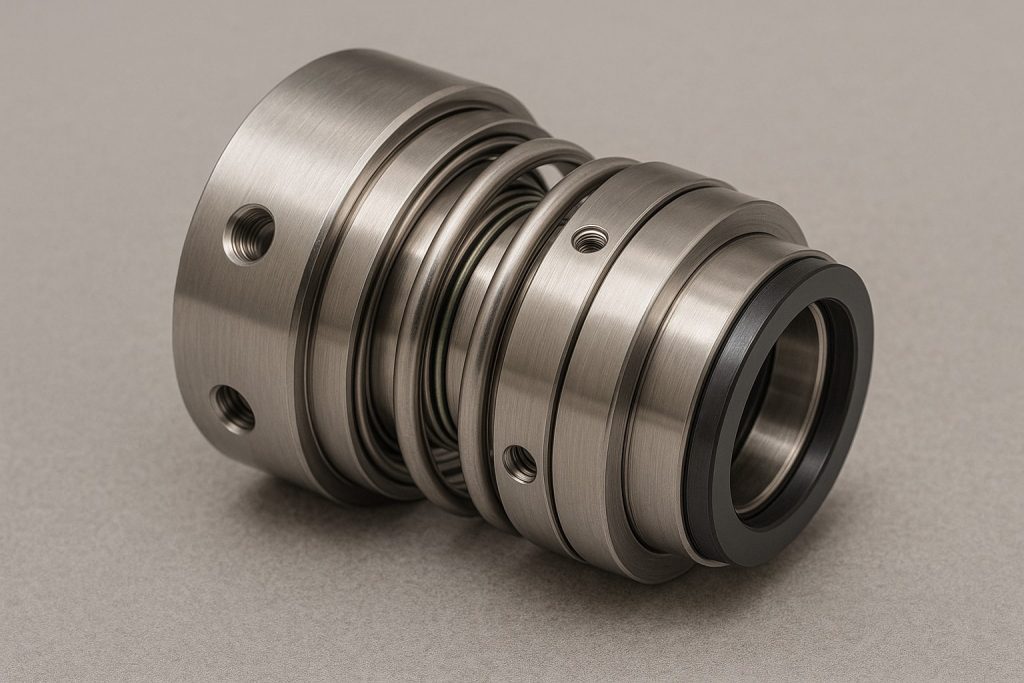
- Mechanical Seal Pumps use a rotating seal to prevent fluid from escaping along the pump shaft. These are the most common in general industrial use.
- Magnetic Drive Pumps are seal-less. Instead of a shaft seal, they use a magnetic coupling to transmit power to the impeller from outside the fluid chamber.
Magnetic Drive Pumps: Pros and Cons
Pros:
1. Zero Leakage
No shaft seal means no fluid escaping. Ideal for corrosive, toxic, or expensive fluids.
2. Lower Maintenance
No seals to fail or replace, and fewer moving parts generally means less wear.
3. Safe for Hazardous Chemicals
Often chosen in chemical handling, pharmaceutical, or explosive environments where emissions and vapors must be fully contained.
4. Good for Continuous Operation
Designed for leak-free performance in steady-state systems with little need for adjustment.
Cons:
1. Cannot Handle Solids Well
Most mag drive pumps are unsuitable for slurries or fluids with suspended solids, as these can damage internal components or clog the containment shell.
2. More Sensitive to Dry Running
Without lubrication from fluid, mag drive pumps can overheat and fail quickly if run dry—even briefly.
3. Higher Initial Cost
They’re generally more expensive upfront than a standard sealed centrifugal pump.
4. Limited Repairability
Repairs often involve full unit replacement or return-to-manufacturer service.
Mechanical Seal Pumps: Pros and Cons
Pros:
1. Versatile Across Fluids
Can handle a wide range of liquids, including slurries, fibrous materials, and solids-laden fluids.
2. Easier to Maintain On-Site
Mechanical seals are field-replaceable, and many technicians are familiar with standard service practices.
3. Lower Initial Cost
Generally less expensive to purchase and install, especially for general-purpose or low-risk applications.
4. More Options and Configurations
Wider availability of pump types, sizes, and seal arrangements.
Cons:
1. Potential for Leakage
Mechanical seals wear over time and can begin to leak, especially in abrasive or corrosive services.
2. Higher Maintenance
Requires regular seal inspections, replacement parts, and occasional re-alignment.
3. Downtime for Seal Failure
Seal-related breakdowns can lead to unscheduled downtime and cleanup costs.
4. Not Ideal for Volatile Chemicals
Even minor leaks can pose a safety or environmental hazard with toxic or volatile fluids.
So… Which Should You Choose?
| Use Case | Best Choice |
|---|---|
| Corrosive or hazardous chemicals | Magnetic Drive Pump |
| General-purpose or low-risk fluids | Mechanical Seal Pump |
| Fluids with solids or abrasives | Mechanical Seal Pump |
| Leak-free design is critical | Magnetic Drive Pump |
| Budget-conscious operations | Mechanical Seal Pump |
| Minimal maintenance environments | Magnetic Drive Pump |
Final Thoughts
Choosing between a magnetic drive and mechanical seal pump comes down to understanding your fluid, your environment, and your priorities. If containment and leak prevention are critical, mag drive is hard to beat. But for abrasive, variable, or solid-laden applications, mechanical seal pumps may offer more flexibility and easier serviceability.
Need help evaluating your system?
Get in touch with The Pump Expert—we’ll help you compare options and make the best choice for your site.
Last Updated on March 19, 2026 by TPE
