
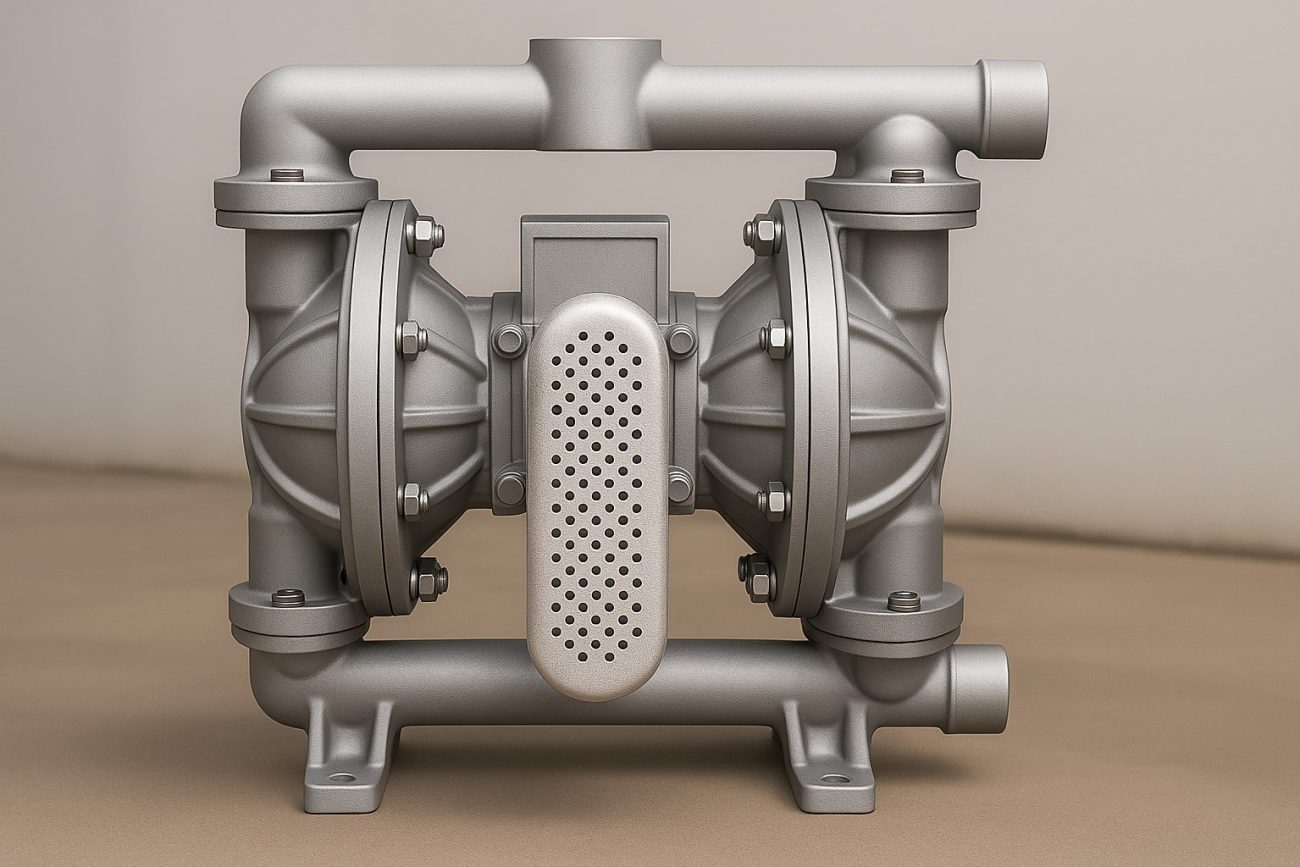
Air-operated double diaphragm (AODD) pumps are famous for their versatility. They can move thin solvents one day and thick slurries the next. But when solids enter the picture—whether that’s grit, seeds, pulp, or mineral fines—the question comes up: can my pump handle it without clogging or failing?
The answer depends on the pump’s design, how it’s applied, and a bit of operator know-how.
Understanding Solids Handling in AODD Pumps
One of the big advantages of AODDs is their ability to pass solids without shredding or grinding them. The diaphragm action creates a gentle, pulsing flow that’s often ideal for fragile or irregular materials.
However, every pump has limits:
- Maximum solids size – Defined by the ball valve and port size. If the particle is bigger than the valve clearance, it won’t pass.
- Concentration of solids – Heavier slurries increase wear and raise the risk of clogging.
- Material compatibility – Hard or abrasive solids can chew through elastomers and diaphragms.
Common Causes of Clogging and Damage
Even a well-selected AODD pump can run into problems if a few basics are overlooked:
- Oversized particles getting stuck in the suction or discharge check valves.
- Settling solids when suction lines are too long or poorly sloped.
- Elastomer wear from abrasive particles grinding against diaphragms or valve balls.
- Blocked manifolds caused by operators running the pump too fast, pulling more solids than the system can pass.
How to Keep Things Moving Smoothly
A few practical steps can extend pump life and reduce downtime:
- Match the pump to the particle size. Always check the maximum solids rating before selecting.
- Slow it down. Running at a lower stroke rate helps the pump pass solids cleanly and reduces wear.
- Use strainers where it makes sense. Prevent oversized debris from entering the pump.
- Consider wear-resistant materials. PTFE, Santoprene, or reinforced diaphragms stand up better to abrasives.
- Maintain your system. Keep suction lines short, avoid sharp bends, and flush the pump after each use.
Final Word
Yes, AODD pumps can handle solids—and they often do it better than other pump types. But ignoring size limits, running too fast, or overlooking material selection is a recipe for clogging and costly repairs.
The takeaway: know your solids, size your pump correctly, and operate it with care. Do that, and your AODD pump will keep solids moving instead of grinding to a halt.
