
Mining is tough. The fluids are abrasive, the environments are harsh, and downtime is expensive. So when it comes to pumps, you can’t afford to get it wrong. You need equipment that’s built to take a beating and keep moving everything from slurry to dirty water to chemical reagents.
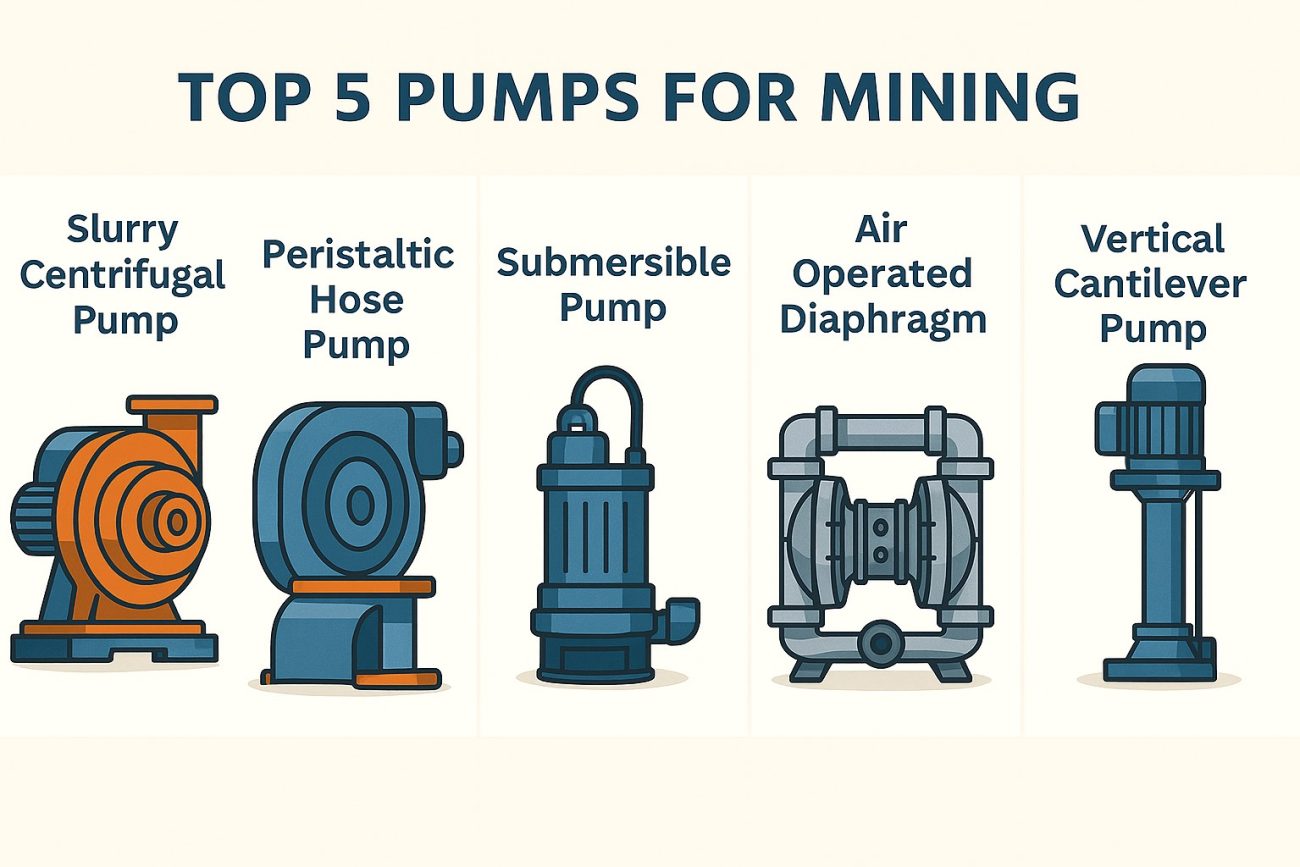
Over the years, a few pump types have proven themselves in mines all over the world. Here’s a breakdown of the top 5 pumps used in mining—and why they actually work.
1. Slurry Pumps (Centrifugal Type)
Best for: Thick, abrasive slurries in processing plants and tailings systems
If you’re moving a mixture of solids and liquid—especially if it’s aggressive, high-wear stuff—this is the pump you’re going to see.
Why they work:
- Designed with wear-resistant liners (rubber or metal)
- Open impeller design handles large solids
- Easy to maintain and rebuild on site
Real-world use:
Tailings disposal, cyclone feed, flotation, thickener underflow.
2. Peristaltic (Hose) Pumps
Best for: Dosing reagents or transferring highly abrasive, corrosive slurries
These are the pumps with the flexible hose and rotating roller setup. They shine in chemical dosing and fine particle slurries.
Why they work:
- Fluid only contacts the hose = less corrosion
- Self-priming, reversible, and dry-run capable
- Excellent for metering and thick sludges
Real-world use:
Flocculant dosing, lime slurry, thick paste transfer in dewatering.
3. Submersible Pumps
Best for: Dewatering in pits, sumps, and underground areas
Submersible pumps are the workhorses of mine dewatering. When water starts pooling, these go straight into the pit.
Why they work:
- Can run fully submerged in dirty, gritty water
- Easy to move around site as needed
- Available with hard-wearing impellers for solids handling
Real-world use:
Open-pit mine dewatering, underground sump management, emergency flood control.
4. Diaphragm Pumps (AODD)
Best for: Portable fluid transfer in remote or hazardous areas
If you’ve ever worked in a plant where compressed air is available but electricity is limited—or where you need chemical resistance—these pumps are gold.
Why they work:
- Air-driven = intrinsically safe
- Can handle slurries, sludge, and even dry solids
- Self-priming and dry-run tolerant
Real-world use:
Chemical dosing, batch transfer, portable clean-up operations.
5. Vertical Cantilever Pumps
Best for: Handling corrosive or abrasive fluids in sumps
When you need to pump out a sump or tank that holds nasty stuff—high solids, corrosive chemicals, or fine slurry—a vertical cantilever pump is your guy.
Why they work:
- No submerged bearings or seals
- Ideal for corrosive or abrasive fluids
- Can handle variable liquid levels without issue
Real-world use:
Sump dewatering, tank drainage, reagent storage clean-out.
In mining, you’re not choosing a pump—you’re choosing what won’t fail under pressure. Each of these pump types has earned its place because it solves a very specific set of problems.
The key isn’t just knowing what the pump does. It’s knowing why it works in mining.
So when you’re planning your next upgrade, expansion, or field fix, think less about specs on a page—and more about what’s proven itself when things get gritty.
Need help choosing the right pump for your mine site or plant? Let’s talk. We’ve seen what works (and what doesn’t) in real-world conditions.
Last Updated on October 23, 2025 by TPE
