
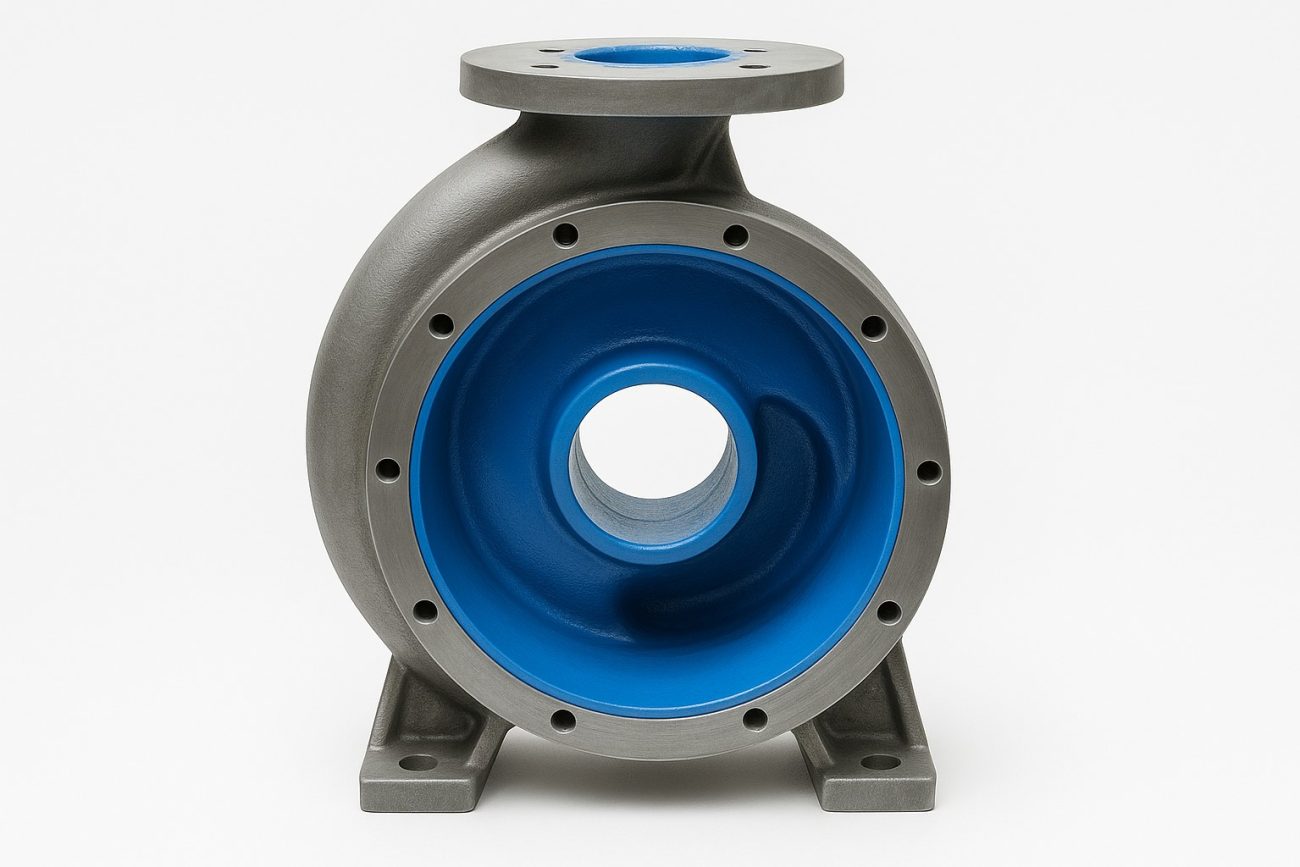
When dealing with aggressive, abrasive, or corrosive fluids, one of the most common questions we hear is:
“Should I coat the pump, or should I invest in a pump made from the correct material of construction (MOC)?”
It’s a fair question — and the right answer depends on your fluid, environment, and expectations.
Key Takeaways
- Choose the Right Material of Construction (MOC) for aggressive fluids, especially when facing high temperatures or continuous exposure.
- Pumps made from materials like PTFE or Hastelloy provide longer life and better reliability under harsh conditions.
- Coatings can improve abrasion resistance but come with risks, such as improper application leading to corrosion.
- Evaluate your application: opt for correct MOC for aggressive fluids and coatings for less corrosive, abrasive scenarios.
- Consult with a pump specialist to assess risks and benefits tailored to your specific needs.
If Chemical Compatibility is Critical, Choose the Correct MOC
If your application involves strong acids, solvents, or oxidisers, and the pump is exposed continuously or at high temperatures, selecting the right construction material is essential.
Going with a pump made from chemically resistant materials like PTFE, PVDF, polypropylene, or exotic alloys (e.g., Hastelloy, Alloy 20) will usually offer:
- Longer service life
- Higher temperature tolerance
- Better long-term reliability
- Reduced risk of catastrophic failure
Use case examples:
- PTFE-lined mag drive pump for hydrochloric acid
- Polypropylene AODD pump for sodium hydroxide
- Hastelloy pump for nitric acid
When Coatings Make Sense
Coatings can still be a valid strategy — especially when the issue is more about abrasion resistance than chemical compatibility.
Protective coatings like rubber linings, ceramic coatings, Metaline, or epoxy layers can help resist wear in applications involving:
- Slurries and tailings
- Sand or grit-laden water
- Wastewater streams with moderate corrosion
Use case examples:
- Ceramic coating on a slurry pump casing to reduce erosion, even then coating a slurry pump is questionable
- Rubber-lined pump in mineral processing
- Epoxy coating on a cast iron pump exposed to mildly acidic water
Know the Risks with Coatings
While coatings can be cost-effective, they’re not foolproof:
- A damaged or improperly applied coating can allow corrosion to attack the base material underneath
- Coatings often aren’t rated for high-concentration chemicals or high temps
- Thermal expansion mismatch can cause cracking or peeling
- Surface prep is critical — without it, coatings won’t adhere properly
So… Which Should You Choose?
Go with the correct MOC when:
- The fluid is chemically aggressive or high-temperature
- The exposure is continuous or critical to plant safety
- You want reliability and minimal maintenance over time
Consider coatings when:
- The fluid is abrasive but not highly corrosive
- Exposure is intermittent
- You’re retrofitting or extending the life of existing equipment
- Budget or lead times are a major factor
There’s no one-size-fits-all answer — but knowing your fluid, concentration, temperature, and system conditions will guide the best decision.
If you’re unsure, consult with a pump specialist who can weigh the risks and benefits for your specific application.
Last Updated on October 24, 2025 by TPE
