
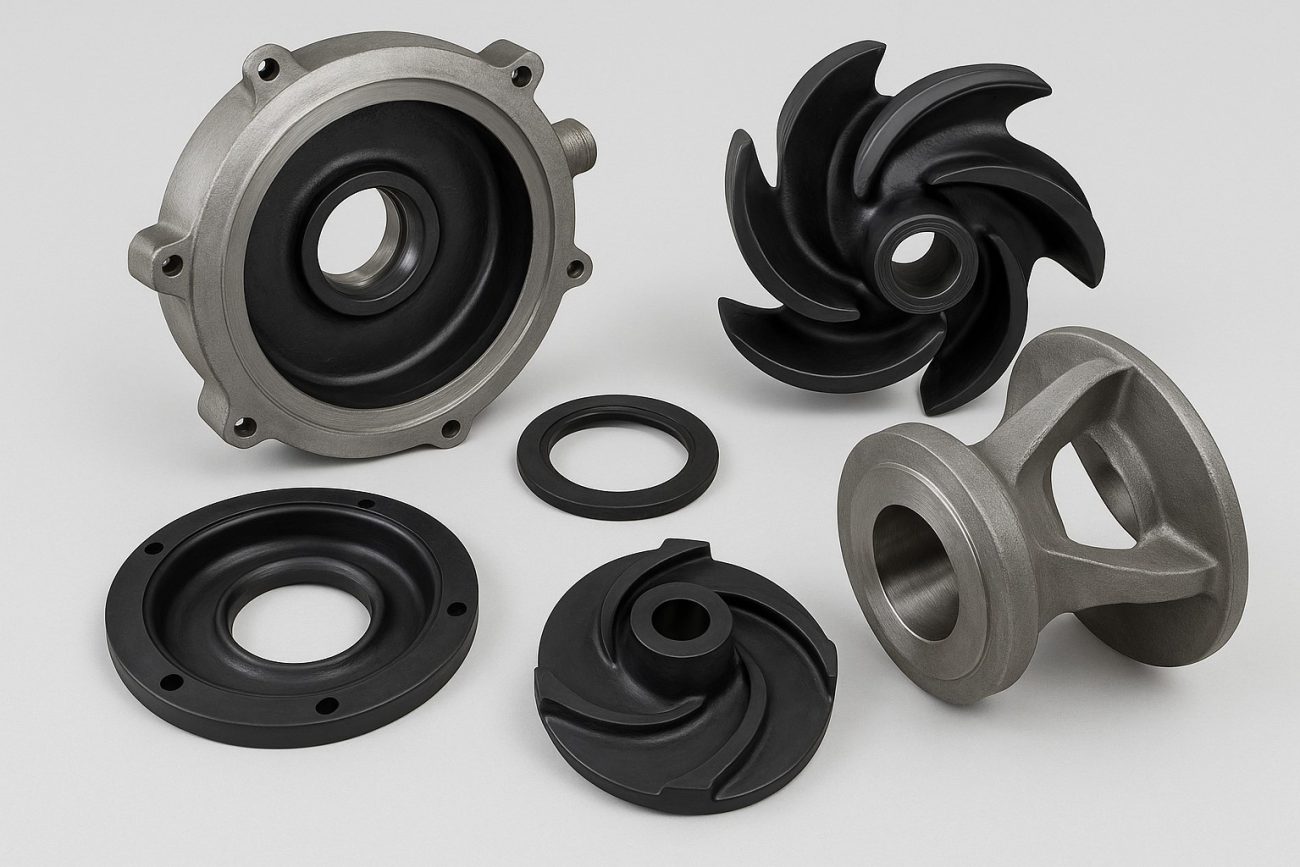
When it comes to pumping slurry, not just any pump will do. Slurries — whether from mining, mineral processing, wastewater treatment, or chemical plants — are abrasive, dense, and often unpredictable.
The key to performance and reliability in slurry pumping isn’t just the pump type — it’s choosing the right liner and impeller materials. Get it wrong, and you’ll face premature wear, constant maintenance, or catastrophic failure.
Here’s what you need to know.
Why Liner and Impeller Material Matters
Slurry is more than just a thick liquid. It’s often a mix of water, chemicals, and solid particles — like sand, tailings, ash, or ore fragments — that aggressively wear down internal pump surfaces.
Your liner protects the pump casing, while the impeller takes the brunt of the fluid’s velocity and impact. Both must be chosen to handle:
- Particle size and hardness
- Solids concentration
- pH and chemical content
- Operating pressure and temperature
- Expected flow rate and speed
Common Liner & Impeller Materials for Slurry Pumps
Let’s look at the most commonly used materials and where they perform best.
1. Rubber (Natural or Synthetic)
Best for:
- Fine, non-angular slurries
- Low to medium-duty mining, sand, or wastewater applications
- Corrosive fluids with soft solids
Advantages:
- Excellent resistance to erosion from small, rounded particles
- Good chemical resistance (depending on the rubber type)
- Lower cost
- Can absorb impact and reduce vibration
Limitations:
- Not suitable for coarse, sharp, or highly abrasive solids
- Can swell or degrade in strong solvents or hydrocarbons
2. High-Chrome White Iron (Hard Metal)
Best for:
- Coarse, sharp, and highly abrasive slurries
- High-flow or high-pressure applications
- Hard rock, ore, or tailings transport
Advantages:
- Extremely hard and wear-resistant
- Handles aggressive abrasion and impact
- Durable under extreme conditions
Limitations:
- Brittle — not ideal for fluids with large tramp solids or high vibration
- Limited chemical resistance (especially in low-pH or highly acidic environments)
- Heavier and more expensive than rubber
3. Polyurethane
Best for:
- Medium-abrasion slurries
- Cyclone feed, light mineral processing
Advantages:
- Tougher than rubber in certain conditions
- Good for fine, sharp particles
- Resistant to stretching or tearing
Limitations:
- Can degrade in some chemical environments
- Not as chemically versatile as rubber
- Not suitable for high temperatures
4. Specialty Alloys (e.g., Hastelloy, Duplex Stainless)
Best for:
- Corrosive slurry environments
- Applications where chemical attack is more severe than abrasion
Advantages:
- High resistance to corrosion
- Reasonable abrasion resistance depending on the alloy
- Long life in aggressive chemical conditions
Limitations:
- Expensive
- Usually not as abrasion-resistant as high-chrome iron
- Often used in specific chemical plant applications rather than bulk slurry movement
Liner and Impeller Pairing Tips
- Match materials: In general, you match liner and impeller material — However in some applications people have found that having a metal impeller and rubber liners have worked quite well. Probably due to the tip speed limitations with rubber impeller.
- Consider particle type: Fine = rubber, Coarse = metal.
- Use manufacturer wear curves: Many slurry pump OEMs publish wear life data based on testing.
- Plan for wear: In severe applications, design for ease of replacement — not zero wear.
In slurry systems, downtime is costly and predictable wear is part of the game. Choosing the right liner and impeller materials is the first line of defense.
If you’re pumping tailings, thickened sludge, or chemically aggressive slurries, take the time to match the material to the application. You’ll avoid breakdowns, reduce maintenance cycles, and keep your flow consistent.
