
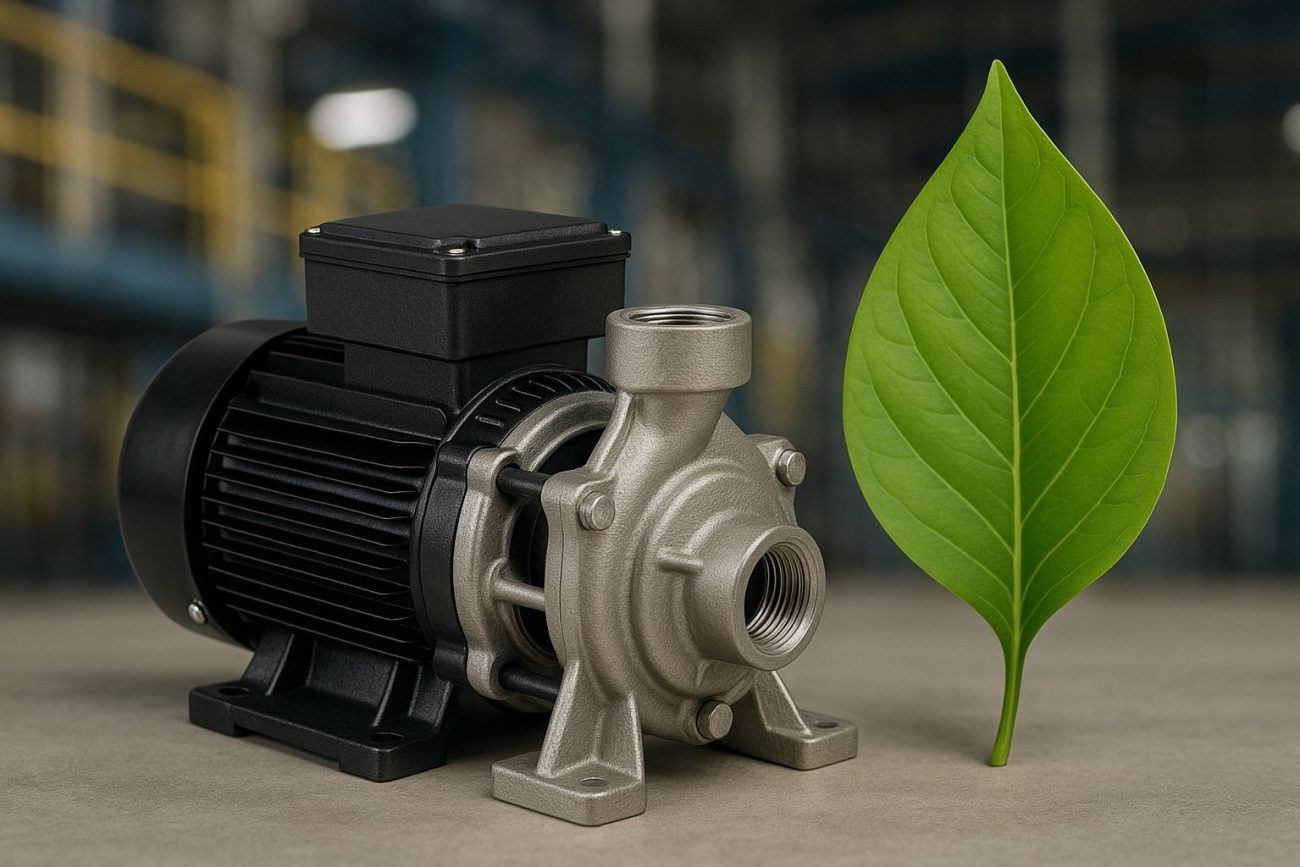
When most people think of energy efficiency in industry, they picture lighting upgrades or compressed air leaks. But there’s a major power consumer hiding in plain sight: pumps.
In fact, pumps can account for up to 30–40% of total electricity use in industrial facilities. That makes them a major contributor to both operational costs and environmental impact—and an overlooked opportunity for meaningful improvement.
The Hidden Energy Cost of Pumps
Pumps are essential in nearly every industry: moving water, chemicals, slurries, fuel, and more. But many are:
- Oversized for their application
- Running continuously, even when not needed
- Operating far from their Best Efficiency Point (BEP)
The result? Wasted energy, increased carbon emissions, and accelerated wear.
Common Causes of Inefficiency
1. Oversized Pumps
Many pumps are selected with excessive safety margins or to handle peak conditions that rarely occur.
Impact: Pumps operate under throttled conditions or at low efficiency, drawing more power than needed.
2. Poor System Design
Bad pipe layouts, unnecessary bends, or undersized lines increase friction losses—forcing pumps to work harder.
Impact: Higher head requirements and wasted energy.
3. Lack of Controls
Running a fixed-speed pump at full capacity 24/7, regardless of demand, is one of the biggest energy wasters.
Impact: Excess energy use, higher wear, and no flexibility.
Sustainable Pumping: What Can Be Done?
1. Optimize Sizing
Use accurate system curves and real operating data to select pumps that operate near their BEP. Right-sizing a pump can lead to 20–30% energy savings.
2. Install VFDs (Variable Frequency Drives)
VFDs let you control pump speed based on demand. Reducing speed by just 20% can cut energy use by nearly 50%, thanks to the affinity laws.
3. Upgrade to Efficient Pump Models
Modern pumps are designed with tighter tolerances and better impellers, often reducing energy use by 5–10% compared to older designs.
4. Monitor and Maintain
Simple steps like realigning shafts, replacing worn impellers, and cleaning strainers can bring pumps back to peak efficiency.
5. System-Wide Thinking
Look at the whole system—pumps, pipes, valves, and controls. Sometimes improving the piping can allow the pump to operate more efficiently.
Environmental Impact Adds Up
Small inefficiencies, multiplied across thousands of facilities and operating hours, result in:
- Gigawatts of wasted electricity
- Millions of tonnes of CO₂ emissions annually
- Higher operational costs across the board
Tackling pump efficiency isn’t just a maintenance task—it’s a sustainability strategy.
Industrial pumps may be out of sight, but they shouldn’t be out of mind. With rising energy prices and growing pressure to cut emissions, optimizing your pumping systems is one of the smartest—and most sustainable—moves you can make.
Looking to audit or upgrade your pumps for better efficiency? Talk to our team about energy-saving pump solutions tailored to your system.
Last Updated on October 23, 2025 by TPE
