
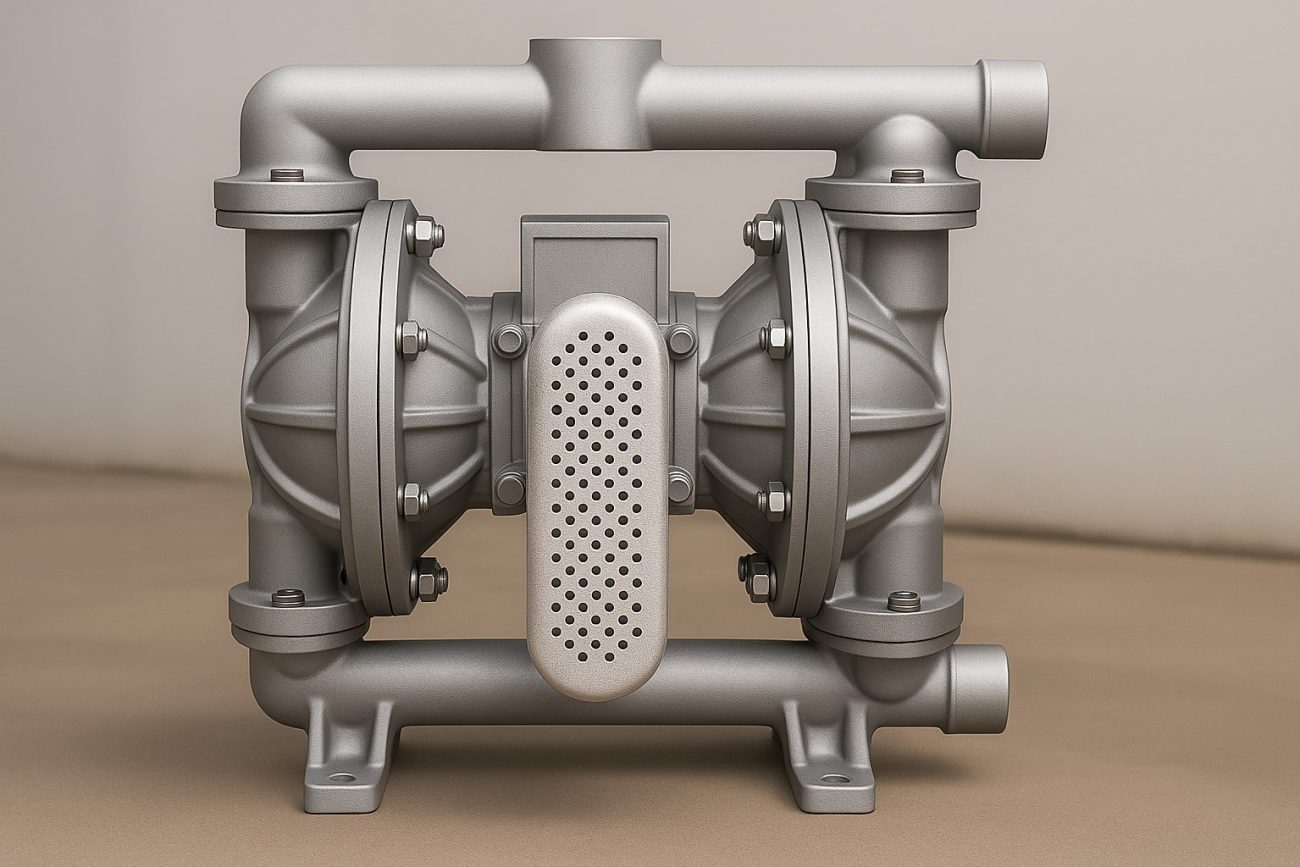
Air Operated Double Diaphragm (AODD) pumps are widely used across many industries due to their versatility, simplicity, and reliability. When maintained correctly, they provide consistent and long-lasting performance. However, inadequate or irregular maintenance can significantly reduce their operational lifespan and increase the risk of unplanned downtime.
Here are the top five mistakes that shorten AODD pump life — and how to avoid them.
1. Running Without Clean, Dry Air
AODD pumps rely entirely on compressed air. If that air supply contains moisture, oil, or debris, the air valve and spool will gum up or wear prematurely. Water in the airline can also freeze in cold conditions, locking the pump mid-stroke.
Best Practice:
- Install air filters, dryers, and lubricators where needed.
- Keep supply pressure within the manufacturer’s recommended range (typically 4–7 bar).
- Regularly inspect and service the air preparation equipment.
2. Ignoring Diaphragm Condition
Diaphragms are the heart of the pump. Waiting for one to fail before replacing it means you risk sudden downtime, loss of containment, or even damaging the pump’s air side if fragments are pulled into the valve system.
Best Practice:
- Replace diaphragms based on service hours or preventive intervals, not only on failure.
- Keep spares in stock.
- Select diaphragm material suited to both the chemical and temperature of the service.
3. Using the Wrong Materials for the Fluid
Not all fluids are equal. Running an AODD pump on aggressive chemicals or abrasive slurries with the wrong diaphragm, ball, or seat materials can destroy internals quickly. A mismatched material may swell, crack, or erode long before its expected life.
Best Practice:
- Match elastomers and wetted parts to the chemical compatibility chart.
- For abrasive duties, use harder ball and seat materials and maintain correct check-ball clearance.
- Review chemical concentration and temperature — many failures stem from assuming “close enough.”
4. Poor Suction Installation
AODD pumps are self-priming, but they are not immune to poor suction design. Long suction runs, air leaks, collapsed hoses, or clogged strainers will starve the pump. This leads to cavitation, erratic operation, and higher diaphragm stress.
Best Practice:
- Keep suction lines short and of adequate diameter.
- Use reinforced hoses to avoid collapse.
- Install strainers or filters, but size them correctly and clean them regularly.
- Check fittings for air leaks that can break prime.
5. Neglecting Bolts and Fasteners
Bolted AODD pumps experience constant flexing as diaphragms stroke back and forth. Over time, casing bolts loosen, which can cause leakage, air ingestion, or uneven diaphragm wear. Many premature failures are traced back to something as simple as unchecked fasteners.
Best Practice:
- Include torque checks on fasteners in the preventive maintenance schedule.
- Re-torque after initial run-in, then at regular intervals.
- Follow the manufacturer’s torque sequence to avoid distortion.
AODD pumps are robust and forgiving, but they’re not indestructible. The five mistakes above — dirty air, worn diaphragms, wrong materials, poor suction design, and loose fasteners — account for most premature failures.
By addressing these areas, you extend pump life, reduce unplanned downtime, and keep your system running as reliably as these pumps were designed to.
Last Updated on September 4, 2025 by TPE
