
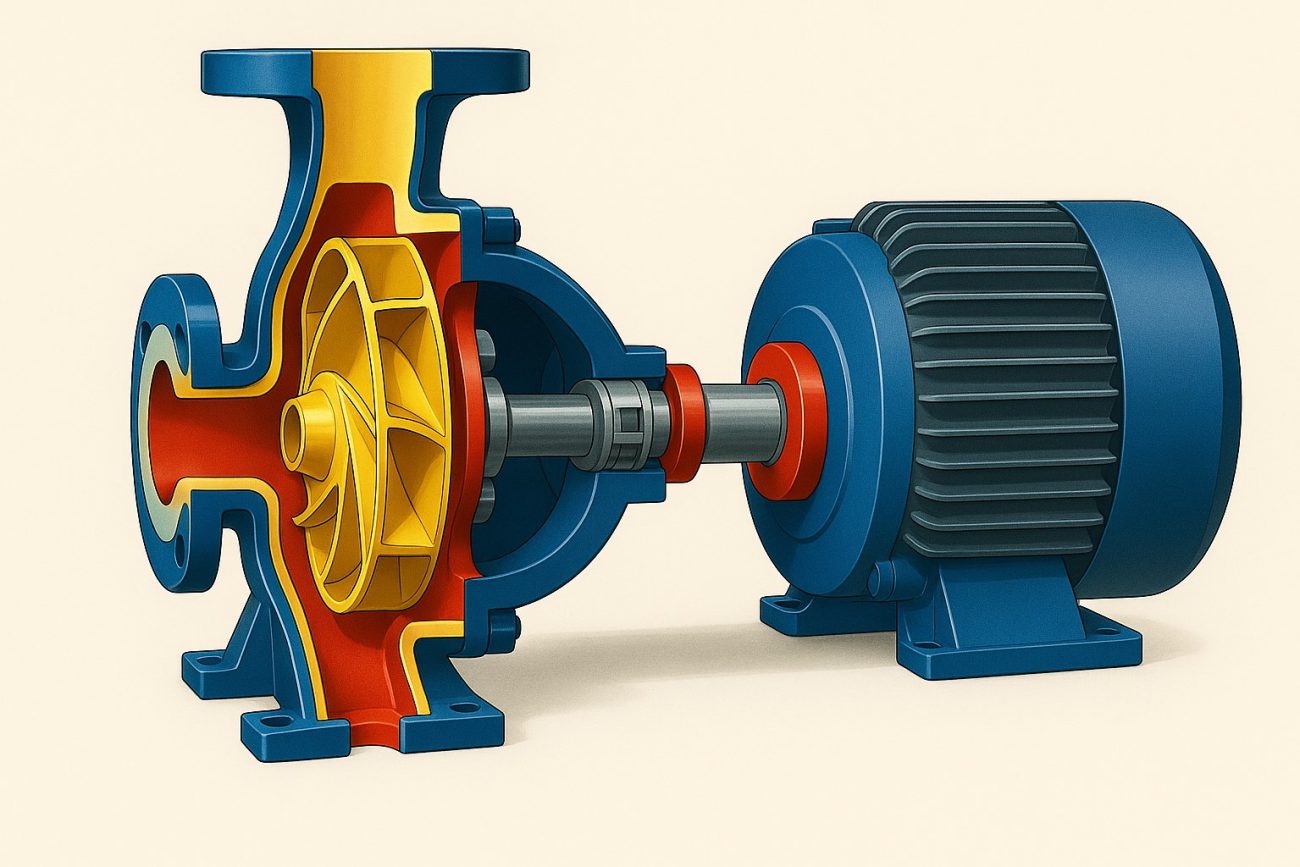
Cavitation is one of the most damaging and misunderstood issues in pumping systems. It can dramatically shorten the life of a pump, reduce performance, and lead to costly repairs. Understanding what causes cavitation—and how to prevent it—can help maintain efficient and reliable pump operation.
What is Cavitation?
Cavitation occurs when the pressure in a liquid drops below its vapor pressure, causing vapor bubbles to form. As these bubbles move into higher-pressure regions of the pump, they collapse violently—producing shockwaves strong enough to damage metal surfaces, especially the impeller.
Signs of Cavitation
- Unusual noise: A rattling or grinding sound, like marbles or gravel passing through the pump
- Reduced flow or pressure: A noticeable drop in performance
- Vibration: Excessive vibration can lead to premature bearing or seal failure
- Physical damage: Pitting or erosion on the impeller or casing
Common Causes of Cavitation
- Insufficient NPSH Available (Net Positive Suction Head):
If the system doesn’t provide enough NPSH to meet the pump’s requirement, vapor bubbles will form at the impeller eye. - Improper Pump Selection:
Using a pump outside of its Best Efficiency Point (BEP) can create conditions conducive to cavitation. - High Fluid Temperature:
Higher temperatures reduce NPSH Available by lowering the fluid’s vapor pressure. - Blocked or undersized suction line:
Restrictions in the suction line (e.g., clogged strainers, small diameter pipe) can lower pressure and promote cavitation. - Excessive elevation lift:
Lifting fluid from a deep or distant source without enough suction head can trigger cavitation.
How to Prevent Cavitation
- Ensure proper NPSH Available (NPSHa):
Compare your system’s NPSHa against the pump’s NPSHr. Maintain a safe margin to avoid cavitation. - Review suction line design:
Use short, straight suction piping with gradual bends and minimal restrictions. Avoid elbows directly at the pump inlet. - Lower the fluid temperature if possible:
Reducing the temperature increases the margin between system pressure and vapor pressure. - Operate near the BEP:
This ensures smoother flow and lower risk of pressure drop at the impeller. - Use the right pump for the job:
Select a pump designed for the fluid type, temperature, elevation, and flow conditions specific to your system.
Final Thoughts
Cavitation is preventable with good system design, proper pump selection, and attention to NPSH and suction conditions. If you suspect cavitation is occurring in your system, don’t ignore the warning signs—addressing it early can save you from extensive damage and downtime.
Last Updated on October 23, 2025 by TPE
