
Choosing the right pump isn’t just about matching flow and pressure specs — it’s about understanding how your entire system behaves under different operating conditions. That’s where the system curve comes in. It’s one of the most useful tools engineers and technicians can use to ensure the pump they choose will perform reliably and efficiently in the real world.
In this blog, we’ll break down what a system curve is, how to use it, and how it helps you make smarter pump selections.
What Is a System Curve?
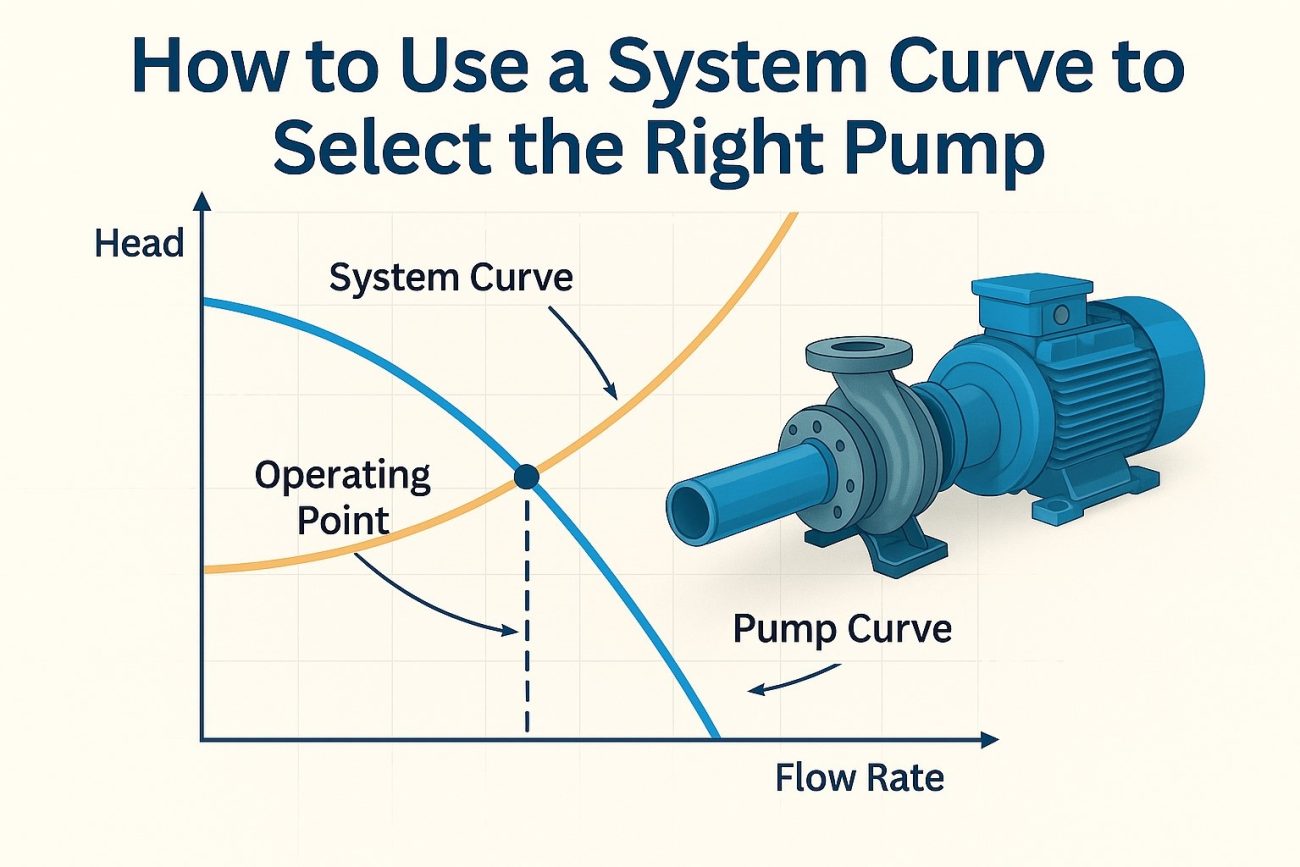
A system curve is a graphical representation of the total head (or pressure) required by your system at different flow rates. It combines static head (e.g., elevation difference) and dynamic head (from pipe friction and fittings).
The system curve starts at the static head value and rises with the square of the flow rate — because friction loss increases exponentially as flow increases.
Why the System Curve Matters
Every pump has a unique performance curve, showing what flow rate it will deliver at various head levels. The point where the pump curve intersects the system curve is your operating point — the actual flow and head your system will see.
Using a system curve helps you:
- Avoid oversized or undersized pumps
- Ensure your pump operates near its Best Efficiency Point (BEP)
- Prevent issues like excess energy consumption, premature wear, or poor flow control
How to Build a System Curve
To create a system curve, you’ll need:
- Static head: The vertical distance the pump must lift the fluid.
- Pipe layout: Total length, diameter, fittings, valves.
- Flow rate range: The range of flows you expect to operate at.
- Fluid properties: Viscosity, specific gravity, etc.
Then, you can calculate total dynamic head (TDH) at various flow rates and plot the results.
Sounds complex? We’ve made it easy.
Try our free System Curve Generator tool:
https://thepumpexpert.com/tools-widgets/system-curve-generator/
How to Use the System Curve in Pump Selection
Once you’ve plotted your system curve:
- Overlay the pump curves from your shortlisted models.
- Look for the intersection point — that’s where your pump will operate.
- Choose the pump whose BEP is closest to this intersection.
- Check for:
- NPSH margin
- Power draw
- Control range (if using VFDs)
Common Mistakes to Avoid
- Ignoring friction losses: Especially in long or complex pipe systems.
- Using one flow rate only: Always plot multiple points to understand how head changes.
- Skipping velocity checks: Excessive velocity can lead to erosion, especially in slurry systems.
Final Thoughts
A pump might look good on paper — but if it doesn’t match your system curve, it could lead to inefficiency, wear, or total failure. Whether you’re designing a new system or replacing an old pump, understanding and using your system curve is one of the most important steps in pump selection.
Don’t guess — plot your curve!
Use the System Curve Generator to get started.
Last Updated on October 23, 2025 by TPE
