
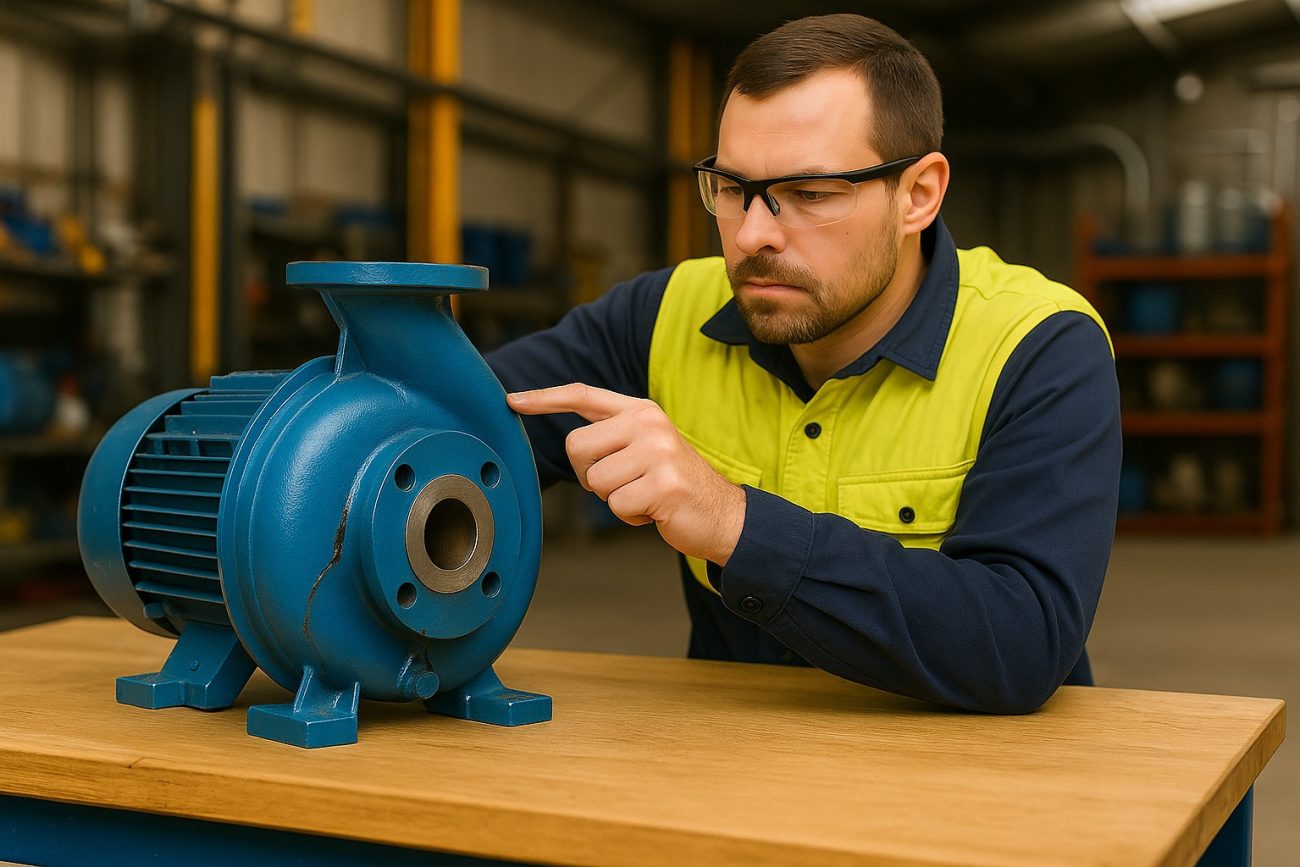
Pumps are critical to the daily operation of industrial, mining, and water treatment systems—yet premature pump failure is still one of the most common and costly problems in fluid handling. A pump that should last years can sometimes fail in just months or even weeks.
So, why does this happen? And more importantly—how do you stop it?
In this post, we break down the most common causes of early pump failure and the practical steps you can take to increase pump life and system reliability.
1. Improper Pump Selection
Many failures begin long before the pump is even installed—right at the selection stage. A pump chosen without full consideration of flow, head, fluid type, and system dynamics is a recipe for trouble.
Common issues:
- Wrong pump type for the application (e.g. centrifugal instead of positive displacement)
- Undersized for the required flow or pressure
- Incompatible materials for corrosive or abrasive fluids
How to prevent it:
- Work with a pump specialist to match pump curves with system requirements
- Factor in solids, viscosity, temperature, and chemical compatibility
- Use tools like system curve calculators and selection software
2. Running Outside the Best Efficiency Point (BEP)
Every pump has a Best Efficiency Point—the flow and head where it operates smoothly with minimal vibration, wear, and energy consumption.
Running too far off this point can cause:
- Hydraulic instability
- Vibration and noise
- Excessive wear on impellers, seals, and bearings
How to prevent it:
- Select pumps that operate close to their BEP
- Use variable speed drives (VSDs) to match pump output with real-time system demand
- Regularly monitor system performance and flow conditions
3. Poor Lubrication and Bearing Maintenance
Bearings are one of the most failure-prone parts of a pump. Too much or too little lubrication, or the wrong type of grease, can cause overheating and premature wear.
How to prevent it:
- Follow the manufacturer’s lubrication schedule
- Use the correct lubricant for your operating temperature and speed
- Train operators on proper lubrication techniques
4. Seal Failure and Leakage
Mechanical seals often fail first—but the root cause is usually elsewhere.
Common causes:
- Dry running (no fluid at startup)
- Cavitation
- Misalignment or vibration
- Incorrect seal material for the fluid
How to prevent it:
- Use seal-less pump types (like magnetic drive or peristaltic) for aggressive or volatile fluids
- Install level sensors to prevent dry running
- Ensure alignment and proper startup procedures
5. Cavitation and Suction Issues
Cavitation occurs when the pressure at the suction side drops below the liquid’s vapor pressure—causing bubbles to form and implode violently inside the pump.
This leads to:
- Pitting and damage to impellers
- Noise and vibration
- Rapid wear and failure
How to prevent it:
- Ensure adequate Net Positive Suction Head available (NPSHa) exceeds NPSH required (NPSHr)
- Avoid excessive suction lift—use flooded suction if possible
- Keep suction lines short, straight, and unrestricted
6. Neglecting Routine Maintenance
Pumps don’t often fail overnight. Most breakdowns show warning signs—noise, vibration, drop in flow—but go unnoticed until it’s too late.
How to prevent it:
- Implement a preventative maintenance schedule
- Conduct vibration analysis and oil sampling for early detection
- Log performance data for trend analysis
Final Thoughts
Premature pump failure isn’t always the result of a manufacturing defect—more often, it’s the result of oversights in selection, setup, or maintenance.
By understanding these failure modes and applying proactive strategies, you can:
- Reduce downtime
- Lower total cost of ownership
- Extend the life of your pump fleet
Need help reviewing your current pump setup or troubleshooting a recurring issue? Get in touch with The Pump Expert team—we’re here to help you build a more reliable, efficient pumping system.
Last Updated on October 23, 2025 by TPE
