
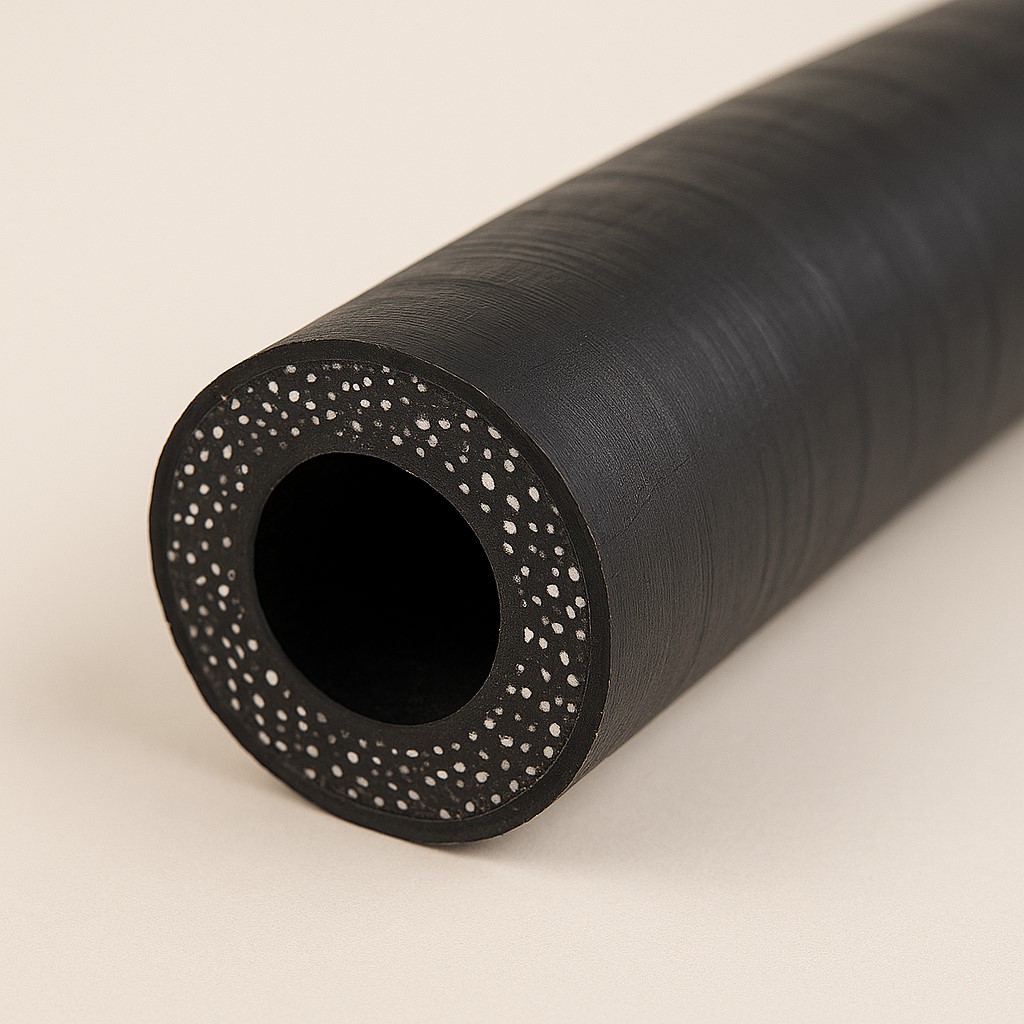
In a peristaltic hose pump, the hose is more than just a consumable part—it’s the heart of the pump. Get the material wrong, and you could be facing premature wear, chemical attack, reduced flow, and costly downtime. Get it right, and you’ll have a reliable, long-lasting pump that delivers consistent performance.
So, how do you know if you’re using the right hose material for your application? Let’s break it down.
Why Hose Material Matters
Every time your pump’s rotor compresses the hose, the hose flexes, rebounds, and is exposed to the fluid inside. This means the material must be able to handle both mechanical fatigue and chemical compatibility. A mismatch here can lead to:
- Cracking or hardening
- Swelling or softening
- Reduced pumping efficiency
- Hose rupture and product loss
Common Hose Materials for Peristaltic Pumps
Natural Rubber (NR)
- Best for: Abrasive slurries, mining, and wastewater solids
- Strengths: Excellent wear resistance, high resilience
- Limitations: Poor chemical resistance to oils, solvents, and strong acids
Nitrile Rubber (NBR)
- Best for: Oils, fuels, and oily slurries
- Strengths: Good resistance to petroleum-based products
- Limitations: Not suited for strong oxidising agents or some solvents
EPDM
- Best for: Acids, alkalis, water-based chemicals
- Strengths: Excellent chemical resistance, good for food and beverage CIP chemicals
- Limitations: Poor resistance to oils and solvents
Hypalon® (CSM)
- Best for: Highly corrosive chemicals, oxidising agents, and acids
- Strengths: Exceptional chemical resistance
- Limitations: Higher cost, not always necessary for less aggressive fluids
How to Choose the Right Hose Material
- Identify the Fluid
- Know the chemical composition, concentration, and temperature.
- Check for abrasives, solids, or oils that may affect the hose.
- Consider the Operating Pressure and Duty Cycle
- Higher pressures and continuous duty require stronger, reinforced hoses.
- Check Chemical Compatibility Charts
- Always verify the material against reliable compatibility tables for your specific fluid.
- Factor in Cleaning & Maintenance
- If you run CIP cycles or regular cleaning chemicals, ensure the hose can handle both the product and the cleaning agents.
- Balance Cost vs. Performance
- The cheapest option may wear out quickly, while the most expensive may be overkill for your duty.
Signs You’re Using the Wrong Hose Material
- Premature failure before expected service hours
- Hose swelling, softening, or cracking
- Drop in flow rate or pump efficiency
- Discolouration or degradation of the hose interior
- Frequent leaks or ruptures
If you notice any of these, it’s time to reassess your hose choice.
Choosing the right hose material is not just about extending hose life—it’s about protecting your pump, reducing downtime, and ensuring safe, efficient operation. A small change in material selection can lead to major savings in maintenance and operational costs.
If you’re unsure which hose material suits your process, The Pump Expert can help you assess your application, review compatibility, and recommend the most cost-effective solution.
