

Handling abrasive slurries is one of the toughest challenges in pumping. Whether you’re moving mine tailings, sand-laden water, cement slurries, or lime sludges, the wrong material choice can lead to rapid wear, unexpected downtime, and high maintenance costs.
So what materials are best for abrasive slurries? The answer depends on your specific application but some clear winners stand out.
What Makes Slurries Abrasive?
A slurry is a mixture of solid particles suspended in liquid. These particles, especially when angular, hard, or high in concentration, create friction and impact inside the pump, wearing down internal components.
Factors that influence abrasion:
- Particle size and shape
- Solid concentration
- Fluid velocity
- Slurry pH and temperature
Key Pump Components Affected by Abrasion
- Impellers
- Pump casings/volutes
- Wear plates and liners
- Seals and hoses (for certain pump types)
Using the right material in these components is critical for extending service life.
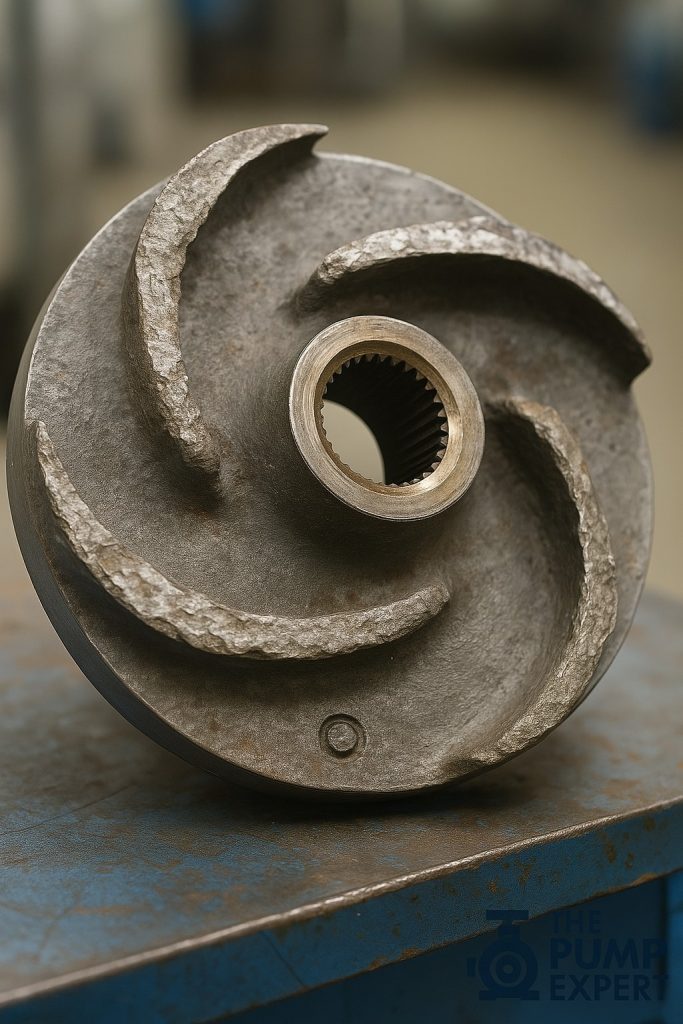
Best Materials for Abrasive Slurries
1. High-Chrome White Iron (27% Cr)
Why it’s great:
Extremely hard and wear-resistant, high-chrome iron is the go-to for handling aggressive slurries in mining and mineral processing.
- Excellent erosion resistance
- Ideal for impellers and volutes in slurry pumps
- Less suited for highly corrosive fluids
Commonly used in centrifugal slurry pumps.
2. Natural Rubber (NR)
Why it’s great:
Soft and flexible, rubber absorbs impact from large, coarse particles, reducing wear.
- Great for coarse or angular solids
- Used in liners, wear plates, and hose pumps
- Not suitable for sharp chemical or high-temp fluids
Popular in lined slurry pumps and peristaltic hose pumps.
3. Polyurethane (PU)
Why it’s great:
Offers a balance between wear resistance and chemical tolerance.
- Resilient in light-to-medium slurry conditions
- Outperforms rubber in some abrasive/chemical mix applications
- Less flexible than rubber
Often used in dewatering or fine particle recovery systems.
4. Ceramic Coatings or Components
Why it’s great:
Ultra-hard and erosion-resistant—ideal for critical, high-wear areas.
- Extremely long life in certain applications
- Resistant to fine, high-velocity particles
- Brittle—unsuitable for large solids or impact zones
Used in specialty seals, liners, and impellers.
5. Stainless Steel (316, Duplex, etc.)
Why it’s not ideal for abrasion alone:
While it offers great corrosion resistance, stainless steel wears quickly under abrasive attack unless the slurry is very dilute.
Better for corrosive liquids with low solids content.
How to Choose the Right Material
Match the material to the application by considering:
- Slurry type (fine vs coarse, soft vs sharp)
- Solids loading (% concentration)
- Chemical composition (corrosive or not)
- Temperature and pH
- Maintenance expectations
You may even mix materials—for example, a high-chrome impeller with a rubber-lined casing.
Final Thoughts
Abrasive slurries don’t just test your pump—they test your material selection skills. Choosing the right wear materials can double or triple the life of your equipment and drastically reduce downtime.
Need help selecting the right material for your slurry pump?
Contact The Pump Expert—we’ll help you build a system that’s built to last.
Last Updated on October 23, 2025 by TPE
