
Loss of prime is one of the most common and disruptive pump issues. The pump runs, but flow drops or stops entirely. In some cases, the pump may appear to operate normally while delivering little or no fluid.
This problem is especially common in centrifugal pumps, which rely on a fully liquid-filled casing to generate suction. Once air enters the system, the pump can no longer move fluid effectively.
This article explains what loss of prime is, how to recognise it, the most likely causes, and how to diagnose and fix the issue in a structured way.
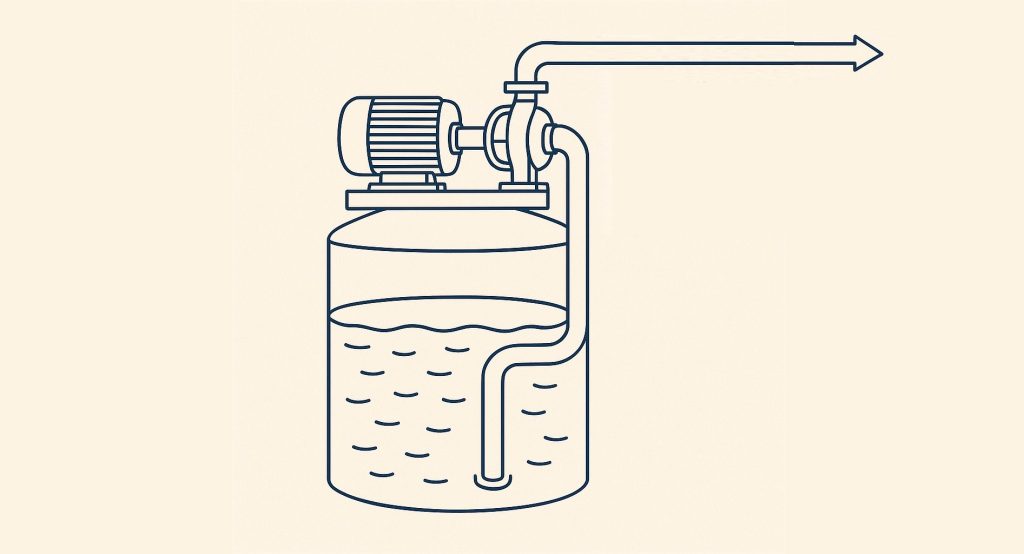
What “loss of prime” actually means
A pump is “primed” when its casing and suction line are completely filled with liquid. This condition allows the pump to generate the pressure difference needed to move fluid.
Loss of prime occurs when air or vapour enters the pump casing or suction line. When this happens:
- The pump loses its ability to generate suction
- Flow becomes unstable or stops
- Internal components may overheat due to lack of fluid
Centrifugal pumps are not self-priming by default. If air enters the system, they cannot remove it without external intervention.
Common symptoms of loss of prime
Loss of prime is usually easy to detect if you know what to look for. The key is to focus on changes in performance rather than just whether the pump is running.
Typical symptoms include:
- No flow or reduced flow despite the motor running
- Fluctuating discharge pressure
- Air bubbles in discharge line or sight glass
- Unusual noise, often a rattling or hollow sound
- Overheating, particularly at the seal area
- Frequent need to re-prime the pump
These symptoms often appear suddenly after startup or following a system disturbance such as maintenance or tank level changes.
Why pumps lose prime
Loss of prime is not a single fault. It is the result of air entering or liquid leaving the suction side of the system. The causes typically fall into a few predictable categories.
1. Air leaks in the suction line
Air ingress is one of the most common causes. Because the suction side operates below atmospheric pressure, even small leaks can draw air into the system.
Typical leak points include:
- Flange gaskets
- Threaded connections
- Valve stems
- Mechanical seal interfaces
Even a minor leak that does not show liquid externally can allow air in.
2. Foot valve or check valve failure
A foot valve (installed at the suction inlet) prevents liquid from draining back when the pump stops.
If this valve leaks or fails:
- The suction line drains when the pump stops
- Air fills the line
- The pump starts dry on the next cycle
This leads to repeated loss of prime after shutdown.
3. Suction lift too high
Suction lift refers to the vertical distance between the fluid source and the pump centreline.
If this distance is too large:
- The pressure at the pump inlet drops
- Vapour or air can form
- The pump struggles to maintain prime
This is closely related to Net Positive Suction Head (NPSH), which defines the pressure required at the inlet to prevent vapour formation.
4. Low liquid level in the source tank
If the fluid level drops below the suction inlet:
- Air enters the suction line
- The pump begins to draw a mixture of air and liquid
- Prime is lost
This often occurs in batch processes or poorly monitored storage systems.
5. Blocked or restricted suction line
Restrictions increase friction losses in the suction line. This reduces pressure at the pump inlet.
Common causes include:
- Debris or sediment buildup
- Partially closed valves
- Collapsed or damaged hoses
Reduced inlet pressure increases the risk of air ingress or vapour formation.
6. Improper startup procedure
Incorrect startup can introduce air into the system.
Typical issues include:
- Starting the pump without filling the casing
- Opening suction valves too quickly
- Failing to vent trapped air
Even a well-designed system will lose prime if startup is not controlled.
Diagnostic approach: how to find the cause
Troubleshooting loss of prime works best when approached systematically. Start with the simplest and most likely causes.
Step 1: Confirm the symptom
Before investigating, confirm that the issue is actually loss of prime and not another problem such as:
- Blocked discharge line
- Mechanical failure
- Incorrect rotation
Check for air presence and lack of suction performance.
Step 2: Inspect the suction line for leaks
Focus on all connections upstream of the pump.
- Look for loose fittings
- Check gasket condition
- Listen for air ingress during operation
A practical method is to apply soapy water to suspected joints and look for bubbles forming inward.
Step 3: Check liquid level and supply conditions
Verify that the fluid source is adequate:
- Is the tank level above the suction inlet?
- Are there vortices forming near the inlet?
- Is the fluid being drawn down too quickly?
Unstable supply conditions often cause intermittent loss of prime.
Step 4: Test the foot valve or check valve
Shut down the pump and observe whether the suction line holds liquid.
If the line drains back:
- The valve is leaking
- It requires cleaning, repair, or replacement
This is a common issue in older systems.
Step 5: Review suction lift and system design
Compare the actual installation against design limits:
- Measure vertical lift
- Check pipe diameter and length
- Assess friction losses
If the system operates close to its limits, small changes can trigger loss of prime.
Step 6: Check for blockages or restrictions
Inspect the suction line internally where possible.
- Remove and inspect strainers
- Check for debris accumulation
- Confirm valves are fully open
Restrictions often develop gradually and are overlooked.
Practical fixes and prevention
Once the cause is identified, the solution is usually straightforward. The focus should be on preventing air entry and maintaining stable suction conditions.
Maintain airtight suction piping
- Replace worn gaskets
- Seal threaded connections properly
- Avoid unnecessary joints in suction lines
Even small improvements in sealing can eliminate recurring issues.
Ensure proper priming before startup
- Fill the pump casing completely
- Vent air from high points
- Start the pump slowly where possible
A controlled startup prevents air pockets from forming.
Install or maintain a reliable foot valve
Where applicable:
- Use a properly sized foot valve
- Inspect regularly for wear or debris
- Ensure it seals fully when the pump stops
This is critical in systems with suction lift.
Control operating conditions
- Maintain adequate tank levels
- Avoid excessive suction lift
- Monitor flow stability
Stable operating conditions reduce the likelihood of air entering the system.
Design for easier priming
Where loss of prime is frequent, consider system modifications:
- Reduce suction lift
- Increase suction pipe diameter
- Relocate the pump closer to the fluid source
Design changes often provide a permanent solution.
When to escalate the issue
Some cases require deeper investigation or system redesign. Escalate when:
- Loss of prime occurs repeatedly despite basic fixes
- The system operates near NPSH limits
- There is evidence of cavitation or internal damage
- The process cannot tolerate intermittent flow loss
At this point, a full hydraulic review of the system may be required.
Key takeaways
- Loss of prime occurs when air enters the pump or suction line, preventing normal operation
- The most common causes are air leaks, valve failure, high suction lift, and low fluid levels
- Symptoms include reduced flow, unstable pressure, and overheating
- Start troubleshooting with simple checks: leaks, liquid level, and valve condition
- Prevention depends on airtight suction piping, proper priming, and stable operating conditions
Read blog: Why Does My Pump Lose Prime
Last Updated on April 2, 2026 by TPE