
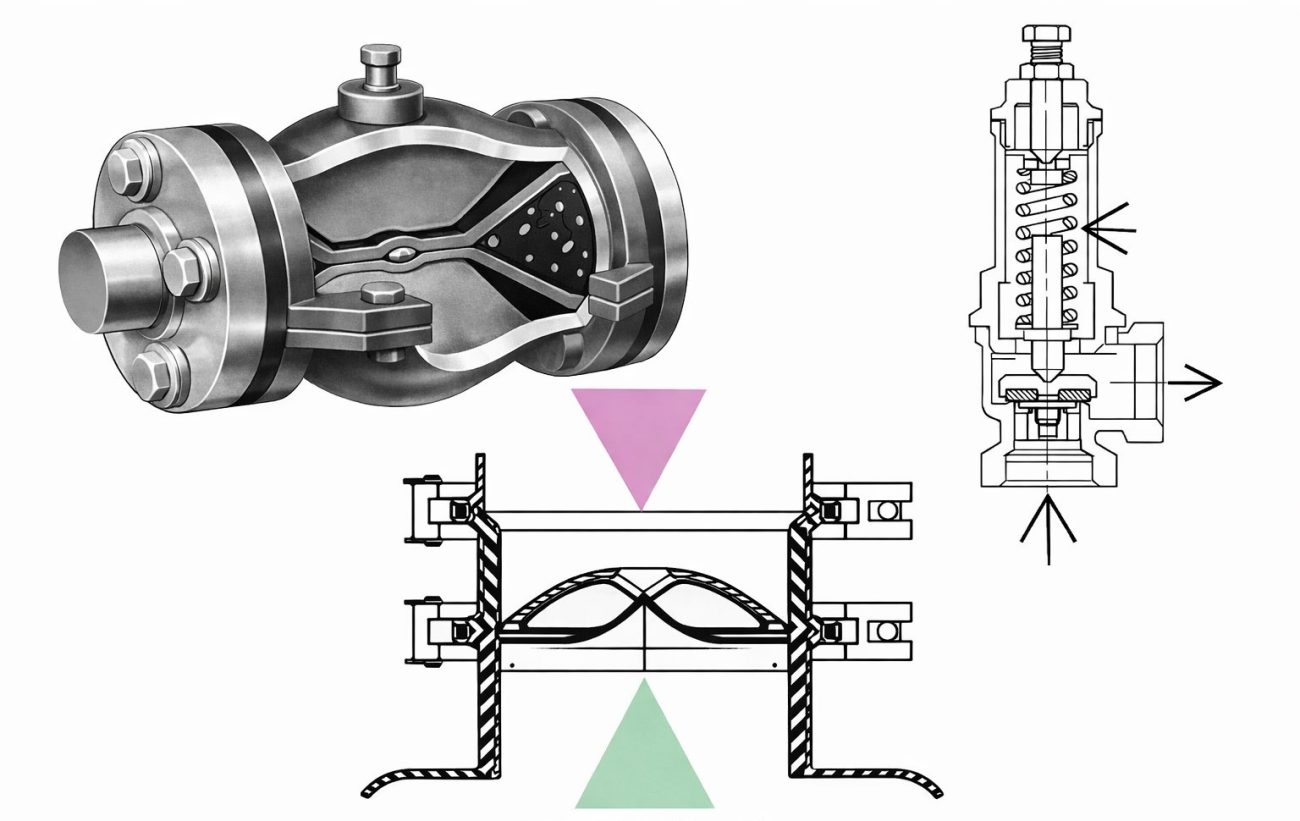
Positive displacement pumps are brilliant machines.
- They deliver a fixed volume per revolution
- They build pressure easily
- They will push against resistance all day long
And that last point is exactly why they must be protected.
Why PD Pumps Behave Differently
Unlike centrifugal pumps, which move along a performance curve as system resistance changes, a positive displacement pump does not naturally “back off”.
Close a discharge valve on a centrifugal pump and flow drops.
Close a discharge valve on a PD pump and pressure climbs.
Rapidly.
The pump doesn’t know there’s a problem. It keeps trying to move the same volume. If the fluid can’t go forward, the pressure will continue to rise until something gives.
And that “something” is usually the most expensive or dangerous component in the system.
What Actually Fails When There’s No Relief?
When a PD pump deadheads, failures are rarely gentle.
You might see:
- Mechanical seal failure
- Split casings
- Burst hoses on peristaltic pumps
- Sheared gear teeth
- Pulled pipe flanges
- Motor overload trips
In slurry or viscous service, add:
- Rapid temperature rise
- Product degradation
- Accelerated internal wear
- Increased safety risk
The energy has nowhere to go. Pressure becomes the release point.
This is why pressure relief on PD pumps is not an accessory. It’s fundamental design practice.
How a Pressure Relief Valve Protects the System
A correctly selected pressure relief valve:
- Is installed on the discharge side
- Sits as close to the pump as practical
- Is set slightly above normal operating pressure
- Diverts flow safely when pressure exceeds the set point
When pressure rises beyond the set value, the valve opens and redirects flow, typically back to tank or suction. Once pressure drops, it reseats.
No electronics.
No programming.
Just physics and spring force.
Simple and reliable — if sized and installed correctly.
Internal vs External Relief – They Are Not the Same
Some gear and screw pumps include internal bypass relief.
Important point:
Internal relief protects the pump internals.
It does not necessarily protect:
- Downstream pipework
- Heat exchangers
- Instruments
- Valves
An internal bypass is pump protection.
An external relief valve is system protection.
In most industrial installations, both perspectives need to be considered.
Types of Pressure Relief Devices
The right device depends on the duty.
Spring-Loaded Relief Valve
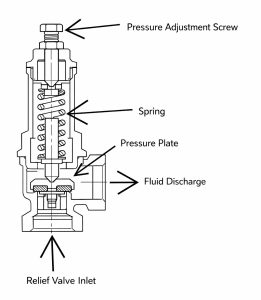
- Most common solution
- Resettable
- Suitable for many clean liquid services
Rupture Disc
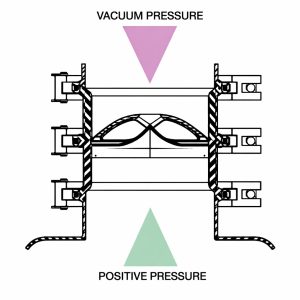
- Extremely fast acting
- No moving parts
- One-time operation
- Common in hazardous or high-risk service
Control or Bypass Valve
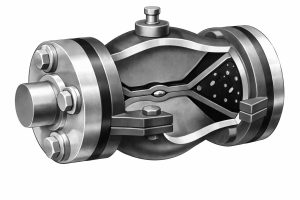
- Used in automated systems
- Not a true mechanical fail-safe
- Dependent on instrumentation and power
In abrasive or slurry applications, material selection and internal clearances become critical. Not every relief valve tolerates solids.
Installation and Sizing
A relief valve installed:
- Too far from the pump
- Undersized for full pump flow
- Set too high
- Returning into a restricted suction line
… may not protect anything.
Proper sizing must consider:
- Maximum pump displacement
- Fluid viscosity
- Temperature
- The pressure rating of the weakest component
This is not guesswork. It is design responsibility.
Final Thought
A centrifugal pump can often survive short periods of deadheading.
A positive displacement pump cannot.
Whether you’re dealing with gear, lobe, screw, piston, diaphragm or peristaltic technology, pressure relief protection must be part of the system design from day one.
Not because a standard says so.
Because physics says so.
A relief valve may never operate.
But if it does, it can be the difference between a controlled event and a very expensive lesson.
—
The Pump Expert
Last Updated on February 12, 2026 by TPE
